



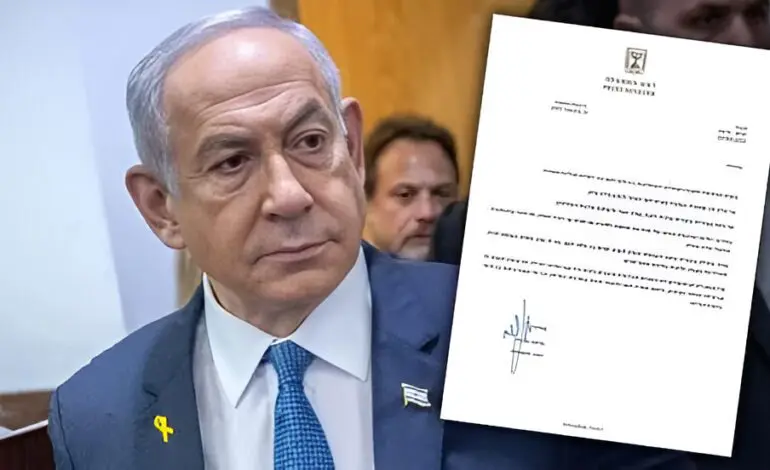

On November 30, Israeli Prime Minister Benjamin Netanyahu officially submitted a request for a presidential pardon to Isaac Herzog, the president of Israel. This dramatic move seeks to end his long running corruption trial, a case that has hung over Israeli politics for years and has often reflected the deep fractures within the country. Netanyahu’s bid is framed as a plea for national unity, yet to critics it appears to be a calculated attempt to escape a legal proceeding that remains unresolved and filled with damaging allegations.
Netanyahu’s pardon request: A test of justice and power
The timing of the request is impossible to ignore. It comes at a moment when the world continues to grapple with the scale of devastation resulting from Israel’s military campaign in Gaza and the occupied West Bank. Many activists and analysts argue that more than 70,000 Palestinians have been killed. While independent confirmation of that exact number remains difficult due to limited access and conflicting reports from various agencies, the toll has clearly been catastrophic. Cities, neighborhoods and entire communities have been leveled, and an enormous number of civilians have suffered under constant bombardment.
Netanyahu’s pardon request arrives at the height of a humanitarian catastrophe, making it impossible to separate his legal troubles from the war he commands.
Netanyahu’s pardon request also arrives with another significant weight attached to it. The International Criminal Court has issued an arrest warrant for him, alleging that he is responsible for war crimes and crimes against humanity. The warrant includes accusations related to starvation as a method of warfare, as well as the deliberate targeting of civilians. This marks an unprecedented moment in international legal history, for it is extremely rare for a sitting head of government from a country aligned closely with the West to be the subject of such charges.
Despite these legal and moral clouds, Netanyahu has received enthusiastic support from President Trump. Trump publicly encouraged the pardon effort and dismissed the corruption case as a politically motivated distraction. He argued that Israel needs Netanyahu’s continued leadership in a time of unrest. His endorsement further strengthens Netanyahu’s political position and signals the extent to which powerful international allies may be willing to shield him from accountability.
The entire situation raises significant questions about justice, the rule of law and the influence of global political power. Netanyahu has not acknowledged any wrongdoing in the corruption case. His letter to President Herzog frames his trial as a source of social strain that undermines Israel’s ability to move forward during a period filled with conflict and international pressure. He claims that ending the trial would help unify the nation, although many Israelis believe the request is instead a direct attack on the integrity of the country’s legal system.
In the history of Israel, presidential pardons have almost always been issued after a conviction rather than during an active trial. This request therefore attempts to create a new legal precedent, one that many members of the Israeli opposition view as dangerous. Critics argue that such a pardon would weaken public confidence in the justice system and would grant immunity to a leader who refuses to answer serious accusations under oath.
While Israel struggles internally with the question of whether a pardon would serve justice or undermine it, the international landscape has been equally turbulent. Numerous governments have condemned Netanyahu’s conduct in Gaza. Countries across Latin America, Africa and parts of Europe have spoken openly about the enormous scale of destruction inflicted on Palestinians. Human rights organizations continue to describe the scenes from Gaza as some of the worst civilian conditions in the modern era, and many have praised the ICC warrant as a necessary step toward holding powerful leaders accountable for their decisions during war.
Several states have even pledged to honor the ICC arrest warrant, meaning Netanyahu risks detention if he travels to any of those nations. Israel, however, is not a party to the Rome Statute, and therefore rejects the ICC’s authority. The Israeli government has denounced the charges as biased and politically motivated. It maintains that its military operations are lawful acts of self defense in response to attacks by Hamas. These conflicting views reveal the extent of the global divide on issues of war, international law and the use of military force.
The ICC warrant presents a stark question: can international law truly function when political alliances decide who is held accountable?
Meanwhile, Washington remains one of the most decisive factors. Trump’s strong support for Netanyahu sends a clear message: political alliances and strategic interests may once again overshadow the pursuit of justice. Even if President Herzog declines to grant the pardon, Netanyahu may still avoid accountability with backing from powerful foreign leaders willing to provide diplomatic protection.
Observers around the world have therefore begun to ask a difficult question. Will Netanyahu ever face real consequences for his actions, either domestically or internationally? The corruption trial may now be on the brink of disappearing. Yet even if it continues, it is overshadowed by the far more serious allegations connected to the war in Gaza and the West Bank. The ICC warrant remains active, and the charges attached to it have not been withdrawn. But political realities make enforcement extremely unlikely. History has repeatedly shown that leaders with strong alliances are rarely brought before international courts, no matter how severe the accusations may be.
For Palestinians, this situation is heartbreaking and familiar. They have lived through decades of displacement, siege and military occupation. Many believe that the world is once again demonstrating that the suffering of their people carries less weight than the political convenience of powerful nations. When destruction, trauma and the deaths of thousands appear to be met with continued diplomatic support for the leader overseeing the war, it becomes difficult to convince them that justice is more than a distant idea.
For Israeli democracy, the implications are equally serious. A government that entertains the possibility of pardoning a sitting prime minister in the middle of a criminal trial is a government that risks normalizing corruption. If the pardon is granted, future leaders may feel emboldened to evade legal scrutiny whenever it becomes politically inconvenient. Even if the pardon is rejected, the very act of requesting it during such a volatile moment exposes deeper questions about how power is exercised and whether the legal system can remain independent.
Internationally, the consequences of this moment may linger for years. If the ICC warrant remains unenforced because of geopolitical alliances, the future of international criminal law could falter. The court’s mission is to uphold justice regardless of political status. If it becomes clear that only leaders from weaker states face legal consequences, then the principle of universal justice loses much of its meaning.
Netanyahu’s future therefore depends not only on the decision of President Herzog, but also on the shifting winds of international politics. With Trump’s vocal support, and with Washington’s history of shielding Israel from diplomatic penalties, the likelihood of real accountability becomes narrower with every passing day. Even if the corruption case vanishes tomorrow, the human suffering in Gaza will remain. Families will continue grieving. Entire neighborhoods will remain in rubble. Yet the leader who oversaw this devastation may walk freely, protected by global power structures.
This possibility forms the heart of the issue. Whether Netanyahu receives a pardon or not, his path toward avoiding justice appears increasingly clear. The backing he receives from powerful allies makes it probable that the legal consequences of both corruption and war crimes will fade into the background. The survivors of Gaza and the occupied West Bank, however, will continue to carry the weight of loss and trauma.
If political alliances can shield a leader from both corruption charges and war crimes, the very idea of justice begins to erode.
In the end, the story of Netanyahu’s pardon request is not only about a legal appeal. It is about the larger struggle over justice in a world where political power often eclipses moral responsibility. It is about the dangerous belief that a leader can wage a war that devastates an entire population, face an arrest warrant from the International Criminal Court, and still be welcomed in the capital cities of powerful nations as an honored guest.
This moment may be remembered as a test of whether the global community truly values the principles it claims to defend. If justice can be brushed aside because a single leader enjoys the protection of influential allies, then the world must confront the painful truth that the law is not always a shield for the vulnerable. Sometimes it bends to the will of the powerful.
If that becomes the final outcome of this saga, the meaning of justice itself will continue to erode, and the victims of violence will remain unheard beneath the weight of political alliances that value strategy over humanity.
– Amjad Khan is a contributing writer for The Arab American News. He is an educator, writer and academic researcher with a deep commitment to addressing the challenges facing the Muslim world. Through his work, he seeks to inspire meaningful dialogue and help chart a path toward unity, justice and peace.



Leave a Reply