




DETROIT — Nearly three years after federal prosecutors dropped healthcare fraud charges against him, Metro Detroit podiatric surgeon Dr. Anthony Weinert has filed a $50 million lawsuit against the U.S. Department of Health and Human Services (HHS) and a federal investigator, alleging that a flawed and reckless investigation destroyed his medical career, reputation and financial future.
The lawsuit, filed in federal court, accuses HHS Special Agent Aaron Hann of falsifying information during an investigation that led to Weinert’s 2019 indictment as part of a nationwide Medicare fraud crackdown involving dozens of healthcare providers. Weinert and his attorney, Nabih Ayad, argue that the government’s allegations were unsupported by the evidence and that federal authorities failed to properly verify key claims before pursuing criminal charges.
The case is the latest chapter in a years-long legal battle that transformed a respected physician and community volunteer into a defendant facing the loss of his profession and livelihood.
From respected surgeon to criminal defendant
Before his indictment, Weinert practiced podiatric medicine for nearly two decades and operated clinics in Warren and Troy. He also served as chief of podiatric medicine and surgery at what is now Henry Ford Warren Hospital and was known for charitable efforts that included providing shoes to homeless individuals, veterans and schoolchildren.
Federal prosecutors charged Weinert in 2019 with participating in a Medicare fraud scheme involving allegedly unnecessary procedures billed to government healthcare programs. The charges were part of a broader federal healthcare fraud investigation that included dozens of defendants.
However, in December 2023, the federal government voluntarily dismissed the criminal case against Weinert before trial. Prosecutors have not publicly detailed all of the reasons behind the dismissal.
Ayad: Investigation was “botched”
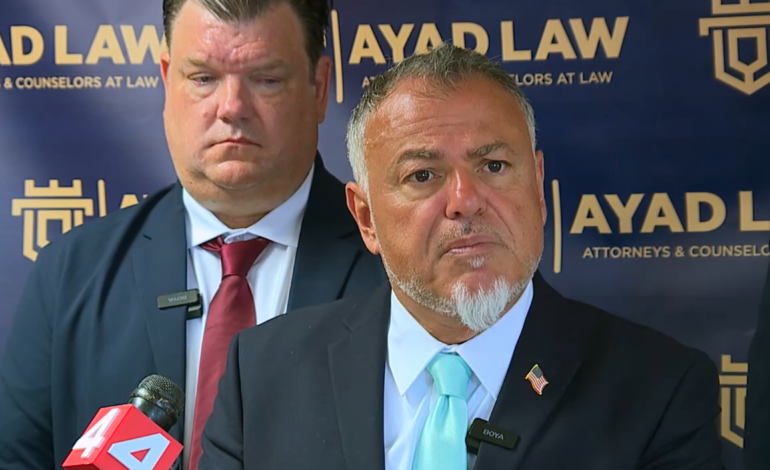
At a press conference announcing the lawsuit, Ayad argued that the case against his client was built on a fundamentally flawed investigation.
According to Ayad, federal investigators alleged that Weinert billed Medicare for procedures that were either not performed or improperly documented. Ayad said that after the defense hired a private investigator to interview patients identified in the government’s investigation, several patients reportedly confirmed that Weinert had in fact performed the procedures and that the treatments were more extensive than simple toenail care.
Ayad contends that once prosecutors reviewed that information, they determined the criminal case could not be sustained and ultimately dismissed it.
“This was a botched investigation,” Ayad said, maintaining that the evidence uncovered by the defense contradicted the government’s allegations.
The lawsuit alleges that investigators rushed to pursue charges without conducting a sufficiently thorough review of the underlying medical evidence. The allegations have not been proven in court, and federal officials have not publicly responded to the specific claims contained in the lawsuit. HHS declined public comment when contacted by local media.
Weinert’s career and finances devastated
While the criminal case was eventually dismissed, Weinert argues that the damage had already been done.
According to the lawsuit and statements made by Weinert and his attorneys, he was effectively unable to bill Medicare for several years while the case remained pending. Since Medicare patients made up a significant portion of his practice, his medical offices eventually closed.
Weinert says he lost his clinics, his hospital leadership position and much of his professional standing in the medical community.
Today, he says he is struggling to rebuild his life. In interviews with local television stations, Weinert described exhausting his savings, facing the possible loss of his home and taking part-time work, including driving for DoorDash and performing basic foot-care services, to support his family.
“I had to do what I had to do for my family because we had bills to pay,” Weinert told reporters. “We went through all of our life savings.”
At another point, he described the emotional impact of the prosecution, saying he still thinks about the case every day and continues to suffer from the trauma of seeing federal agents raid his office.
Accountability or prosecutorial discretion?
The lawsuit seeks $50 million in damages and asks the court to hold federal authorities accountable for what Weinert describes as a wrongful prosecution. His legal team also says he hopes to regain the ability to practice medicine and restore his professional reputation.
Legal experts note, however, that the dismissal of criminal charges does not automatically establish misconduct by investigators or prosecutors.
Former Assistant U.S. Attorney Abed Hammoud told WXYZ-TV that prosecutors have broad discretion to dismiss charges whenever they determine doing so is appropriate, for reasons that may or may not be publicly disclosed.
For Weinert, the lawsuit represents an effort not only to obtain compensation but also to clear his name after years of public scrutiny.
Supporters, including former patients, have publicly defended him, describing him as a compassionate physician whose charitable work and commitment to patients were well known throughout the community.
Whether the lawsuit succeeds remains to be seen, but the case raises broader questions about government accountability, the consequences of failed prosecutions and the lasting impact that criminal allegations can have on a person’s career and reputation — even after charges are dismissed.



Leave a Reply