





At a New Michigan Media roundtable at the offices of The Arab American News in Dearborn, the Democratic attorney general nominee outlined plans to confront hate, protect immigrants and combat fraud.
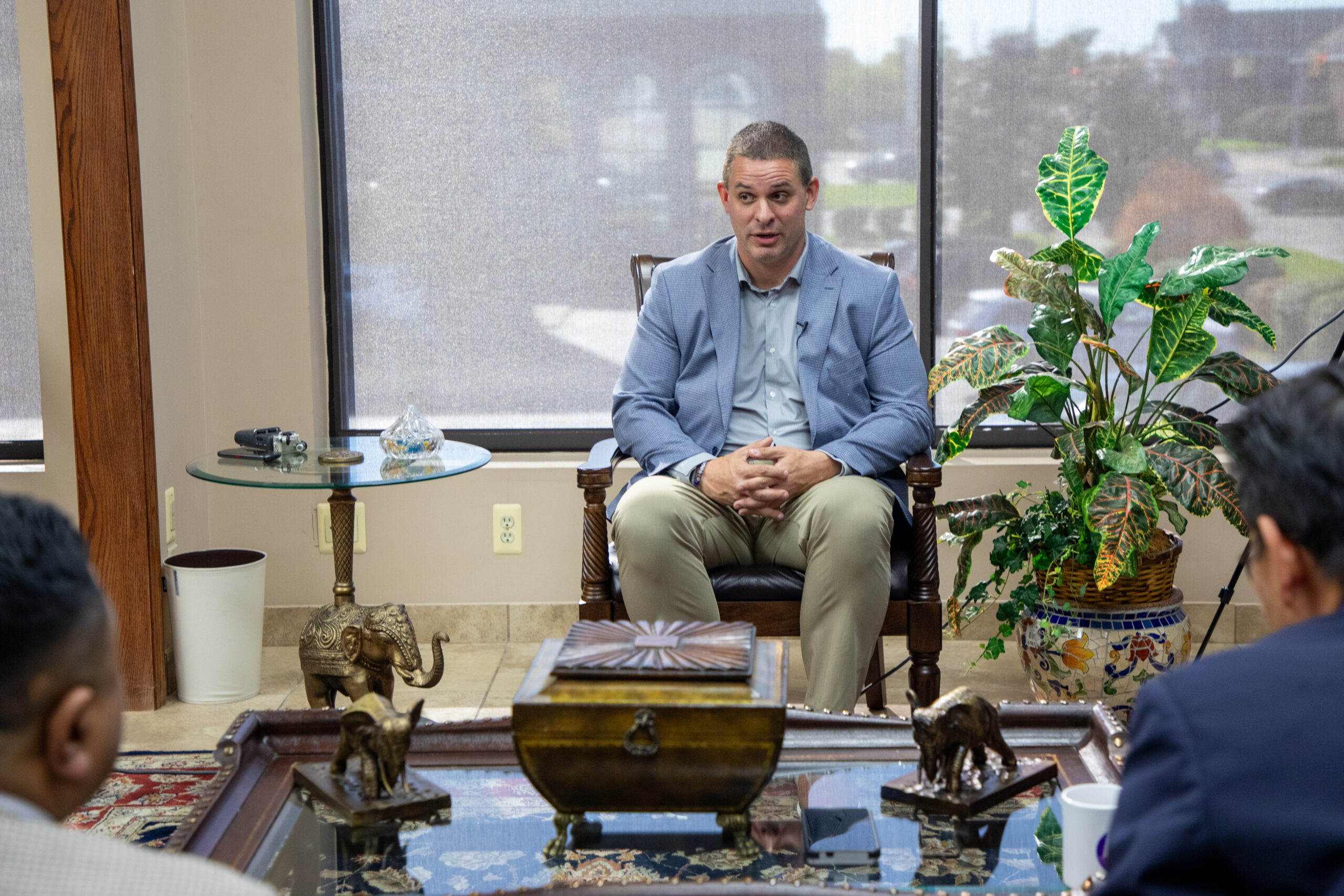
DEARBORN — Democratic Michigan attorney general nominee Eli Savit pledged to defend Muslim communities, protect freedom of expression and oppose local law enforcement cooperation with federal immigration authorities during an October 19 roundtable at The Arab American News offices.
Savit, the Washtenaw County prosecuting attorney, also outlined proposals to protect workers and small businesses, confront scams and prosecute people who exploit undocumented immigrants.
Organized by the New Michigan Media, the discussion brought together ethnic and minority newspaper publishers and editors to question candidates about issues affecting Michigan’s diverse communities. Republican attorney general nominee Doug Lloyd was invited but did not respond to the invitation.
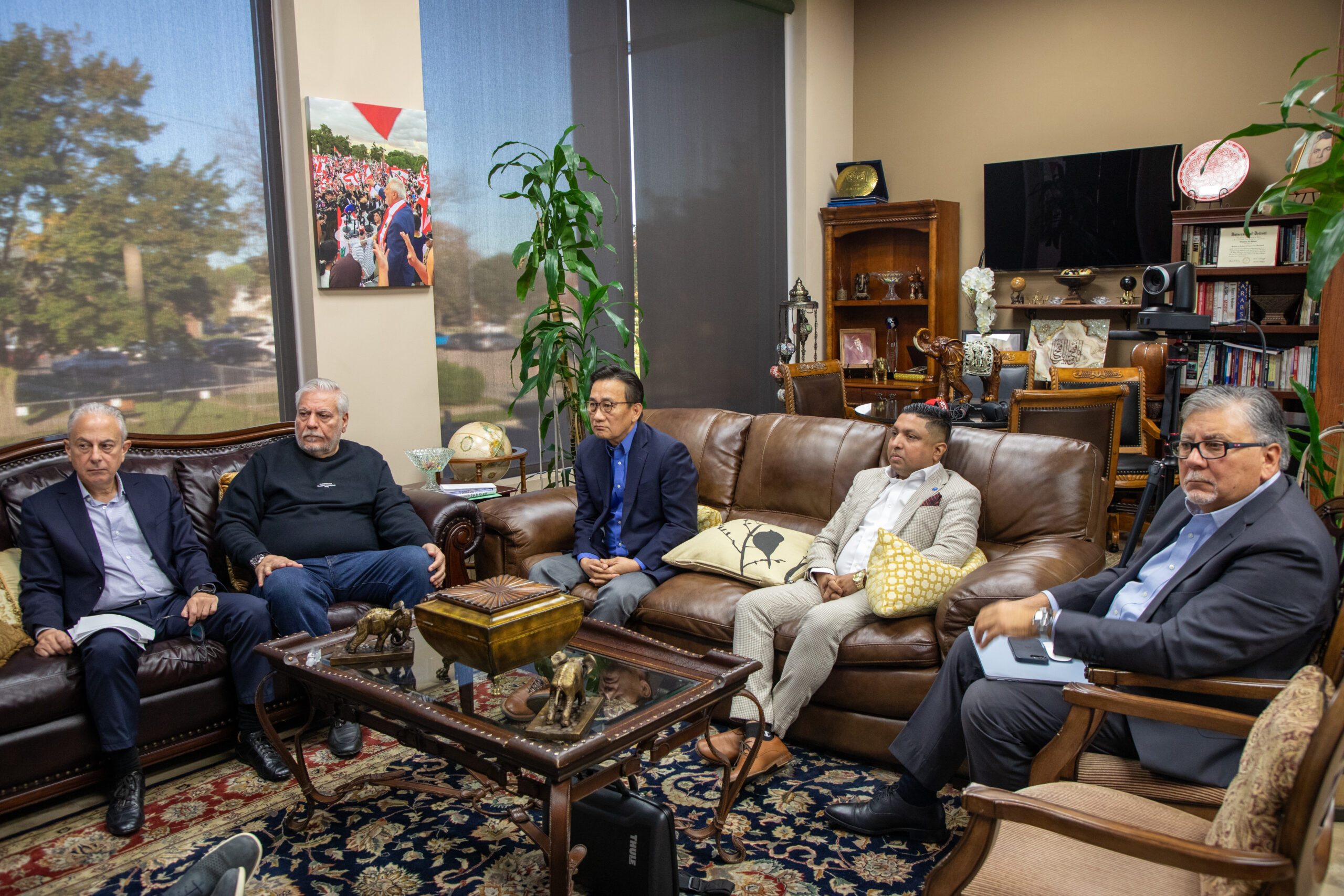
Dr. Hayg Oshagan, New Michigan Media’s executive director, moderated the discussion. Participants included The Arab American News Publisher Osama Siblani, Latino Press Publisher Elias Gutierrez, Michigan Korean Weekly Publisher Tack Yong Kim and Bangla Shangbad Publisher Iqbal Ferdous.
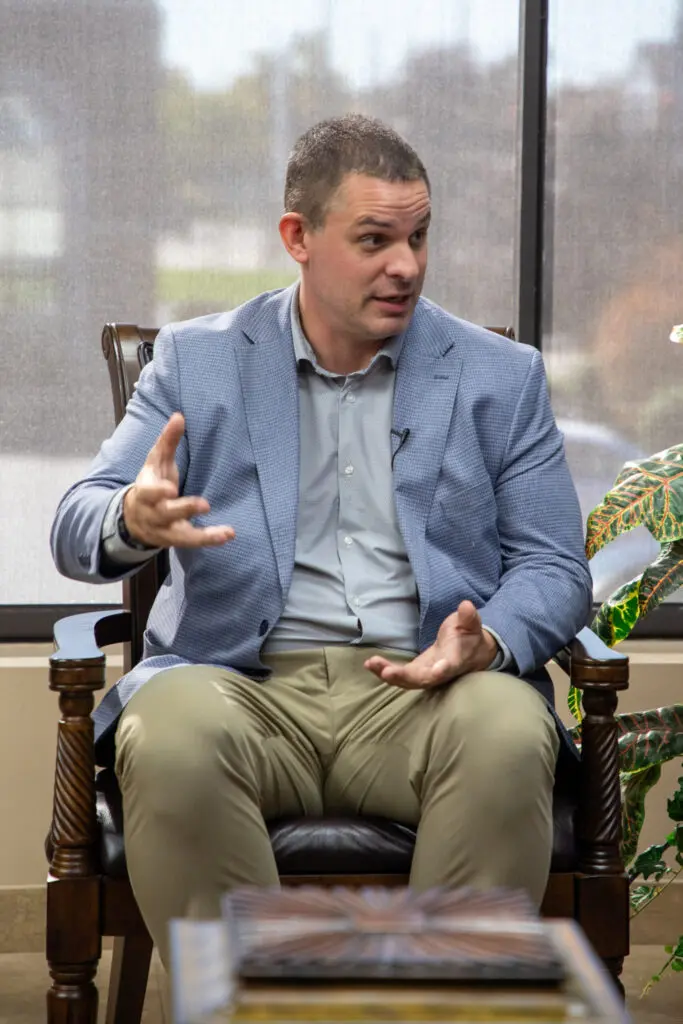
Eli Savit
Standing with Muslim communities
Asked how he would protect Muslims and ensure their representation, Savit promised continued meetings, accessible leadership and recruitment of Muslim applicants across the attorney general’s office, including in leadership positions.
He said consultation must be accompanied by participation in decision-making, invoking the principle of “nothing about us without us.”
Savit also pledged to challenge federal violations of constitutional liberties and enforce Michigan’s Elliott-Larsen Civil Rights Act regardless of federal enforcement priorities.
Addressing far-right activist Jake Lang’s anti-Muslim rhetoric, Savit said elected officials must condemn hate even when no prosecutable crime has occurred. He described fear in Dearborn that, he said, prompted schools to cancel classes and after-school programs.
I’m going to stand with the Muslim community and with Dearborn against these attacks. — Eli Savit
Savit acknowledged that hate speech is constitutionally protected, explaining that government should not decide which viewpoints qualify for protection. But he pledged prosecution when conduct crosses into terroristic threats, violence or other criminal activity, while noting the Supreme Court’s narrow standard for prosecutable incitement.
“I’m bound by the Constitution in what I can do legally, but whenever something like this happens, I’m going to speak out and call it out,” he said.
CLICK ON THIS LINK TO WATCH THE ENTIRE INTERVIEW WITH ELI SAVIT
Defending free expression
Savit linked minority protections to a broad defense of First Amendment rights, including on university campuses.
He cited Rümeysa Öztürk, the Tufts student detained after co-authoring a student newspaper opinion piece criticizing government policies and her university’s investment in Israel.
“I don’t care what you think about the subject of an op-ed,” he said. “The minute we have people being taken off the street for writing something in a student newspaper, we have lost the First Amendment, and that is ultimately going to impact all of us.”
Protecting speech, he emphasized, must extend to views people strongly oppose.
Immigration and public safety
Savit opposed local police and sheriff’s departments collaborating with U.S. Immigration and Customs Enforcement (ICE), arguing that fear of immigration authorities discourages victims and witnesses from reporting crimes or testifying.
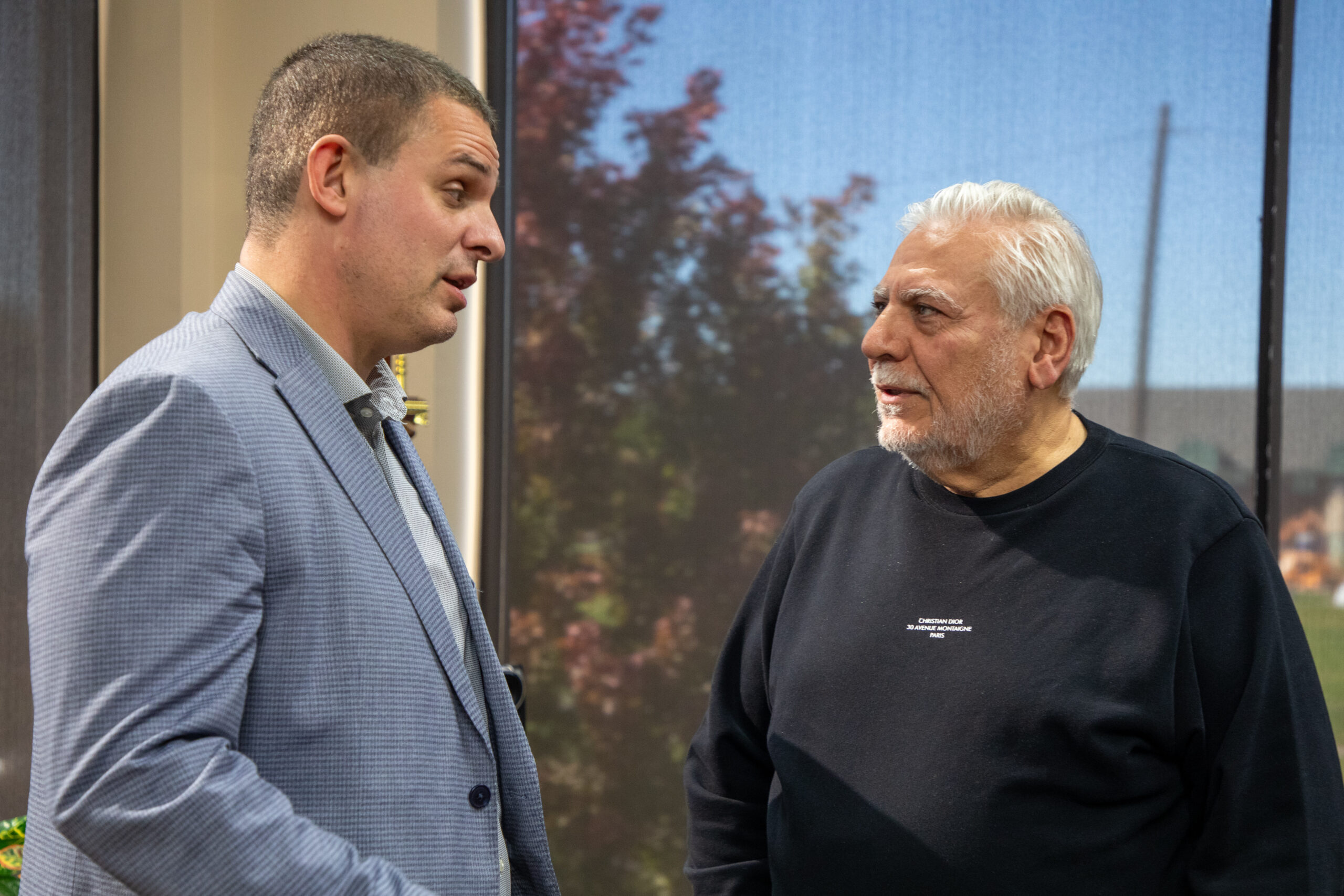

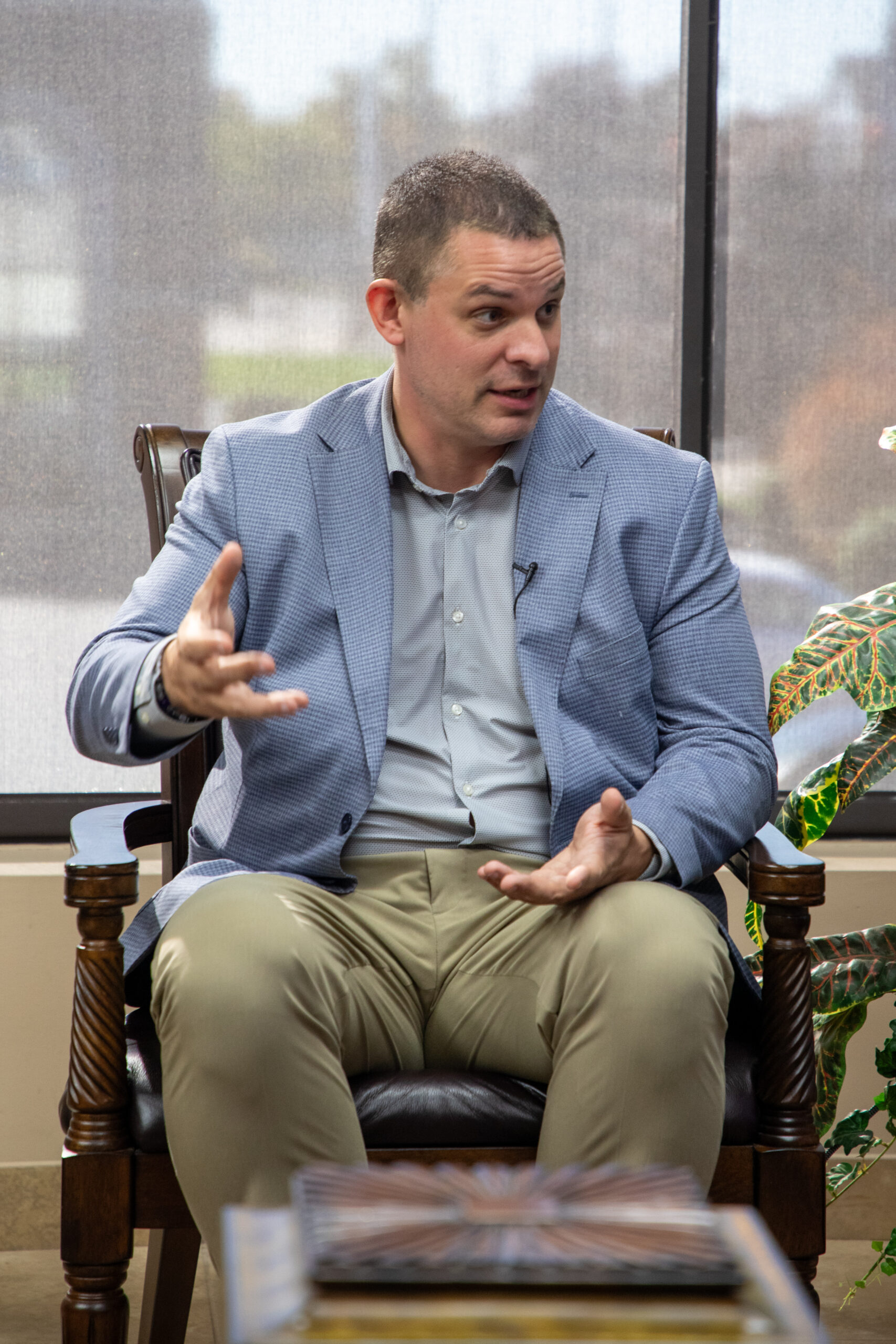


I oppose it, and I oppose it for public-safety reasons as much as anything. — Eli Savit
He said his office does not collaborate with ICE to the extent permitted by law, but even in Washtenaw County, immigrants remain afraid to participate in prosecutions.
“When we’re not able to prosecute serious violent offenders, that doesn’t just impact affected communities,” he said. “It impacts all of us.”
Savit said a Trump administration lawsuit challenging his noncooperation policy was dismissed. He emphasized, however, that the attorney general cannot order local sheriffs, police departments or prosecutors to adopt particular policies.
He would instead provide legal guidance and defend the position that the Tenth Amendment does not require local authorities to perform federal immigration enforcement duties.
“This is not me imposing my personal policy preferences,” he said. “This is the Constitution.”
Protecting immigrants from exploitation
Asked about professionals who threaten to report undocumented clients or workers to immigration authorities, Savit pledged accountability for extortion and labor trafficking.
“I want to hold those bad actors accountable for abusing people, extorting people and, in some cases, trafficking people,” he said.
He discussed potential T and U visa protections for qualifying trafficking survivors and crime victims who cooperate with law enforcement. His office prioritizes the law enforcement certifications associated with those applications, he said.
But Savit cautioned against offering false assurances: A state attorney general cannot override federal immigration law, and federal authorities ultimately decide whether to issue visas.
Helping workers and small businesses
Savit said prevention should guide labor-law enforcement, including educational materials helping employers and workers understand their obligations and rights.
I’m about getting things done. I’m about preventing harm from happening in the first place. — Eli Savit
He cited his office’s Economic Justice Unit and cases involving employers who made genuine mistakes, agreed to repay workers and stopped unlawful practices.
Resolving those cases promptly can accomplish what years of litigation would achieve, he said, while repeat violations could warrant penalties.
Combating scams through multilingual outreach
Savit proposed statewide multilingual education about scams, workers’ rights and crime victims’ rights, building on materials his office translated into Washtenaw County’s seven most commonly spoken languages.
He favored outreach in houses of worship and community gathering places, with translators and information explaining both prevention and reporting.
He also welcomed regular communication with ethnic media to distribute warnings and hear community concerns.
Warning that artificial intelligence will make scams more sophisticated, Savit proposed using Michigan’s Consumer Protection Act to establish standards for responsible distribution of AI services and pursue companies that violate applicable rules or laws.
Closing the interview, he promised continued engagement if elected November 3.
“I’m going to continue to show up. I’m going to answer my phone. I’m going to be there, because representing every community in the state requires listening, requires showing up and requires exactly the types of conversations that we’ve been having today.”



Leave a Reply