



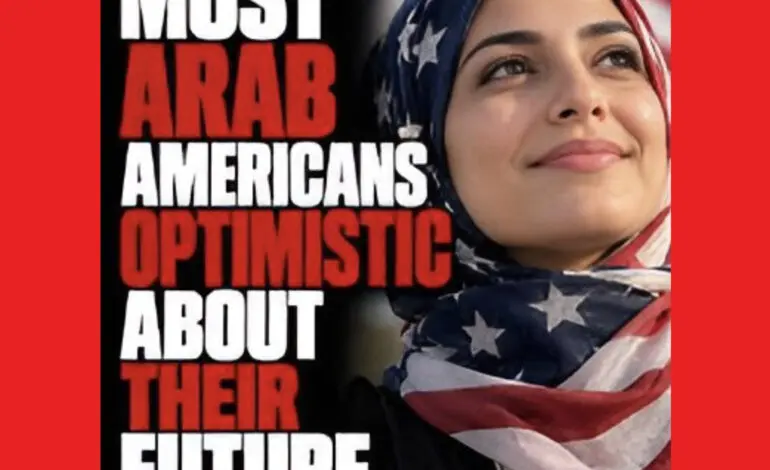

WASHINGTON, D.C. — A poll published by The Washington Post revealed a striking contrast in Arab Americans’ outlook on their future in the United States: 78 percent expressed optimism about their ability to improve their standard of living, compared with just 40 percent of Americans overall.
The survey found that most Arab Americans can envision a better future for themselves in the United States despite political polarization, concerns about discrimination, economic challenges and rising living costs that have fueled frustration throughout American society.
That optimism persists alongside widespread dissatisfaction with the country’s direction.
Identity, belonging and discrimination
The unprecedented survey found that two in three Arab Americans consider themselves “typical Americans” in every sense of the term. Seven in 10 said being American is a very important part of their identity and national belonging.
Regarding religious freedom, 87 percent of respondents said they feel free to practice their religion in American society without restrictions.
The survey also documented negative experiences and perceptions: Eight in 10 respondents believe there is clear prejudice against Arabs and Muslims in the United States.
One in four reported that they or a relative had experienced immigration-related difficulties during the past two years. Those experiences included prolonged questioning at airports or complications entering or leaving the country.
Political concerns and hopes for change
The poll found differing attitudes toward political leaders, with some respondents expressing concern about Donald Trump’s policies and statements.
At the same time, respondents expressed optimism about the emergence of new political figures of Arab and Muslim backgrounds, including Egyptian American candidate Abdul El-Sayed in Michigan.
The Palestinian cause also figured prominently in respondents’ views, with many expressing deep anger over continued U.S. support for the Israeli occupation.
Despite that political anger, participants emphasized their attachment to their American identity and their belief that change is possible from within the political system.
Survey methodology
Conducted in partnership with George Mason University’s Schar School of Policy and Government in the Washington metropolitan area, the poll surveyed 412 adults of diverse Arab ancestry between August 20 and September 7, 2026.
Of those participants, 358 explicitly identified themselves as Arab, forming the group on which most of the findings focused.
According to the Census Bureau, approximately 3.5 million people in the United States trace their ancestry to one of 22 Arab countries or territories, stretching from Western Sahara to Oman.
The Schar School reported a margin of sampling error of plus or minus 6.7 percentage points for the Arab American sample.
The findings offer policymakers in Washington insight into changes within a community with considerable influence in battleground states, particularly Michigan.
The Washington Post report concluded that Arab Americans balance pride in their cultural identity with full participation in the American dream. Despite challenges related to discrimination and foreign policy, the community remains hopeful about achieving lasting economic and social well-being.

Leave a Reply