




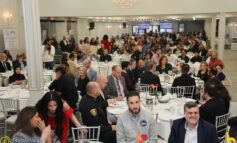
WESTLAND — In a well-attended evening combining a celebration of medical achievements with a vision for serving local communities, the Michigan chapter of the National Arab American Medical Association (NAAMA) held its 43rd annual gala at the Soho Banquet & Event Center in Westland, drawing physicians, healthcare leaders and community figures from across Metro Detroit.
The annual dinner, held Oct. 16, honored Dr. Basim Dubaybo with the Lifetime Achievement Award in recognition of his distinguished career dedicated to medicine, education, leadership and community service. The award also expressed the Arab American medical community’s gratitude for his “continuous contributions and outstanding service, which have had a profound impact on supporting medical and volunteer initiatives over the past decades.”
Association officials praised Dubaybo’s enduring contributions as a physician, academic leader and longtime NAAMA supporter. His work, they said, has left a deep and tangible mark on the local medical community and successive generations of Arab American physicians.
They emphasized that his “unwavering commitment to excellence, dedication to mentorship and guidance, and continued devotion to community service embody the highest ideals of the association’s mission and goals.”
Dubaybo is a prominent physician and researcher specializing in pulmonary medicine, critical care and internal medicine.
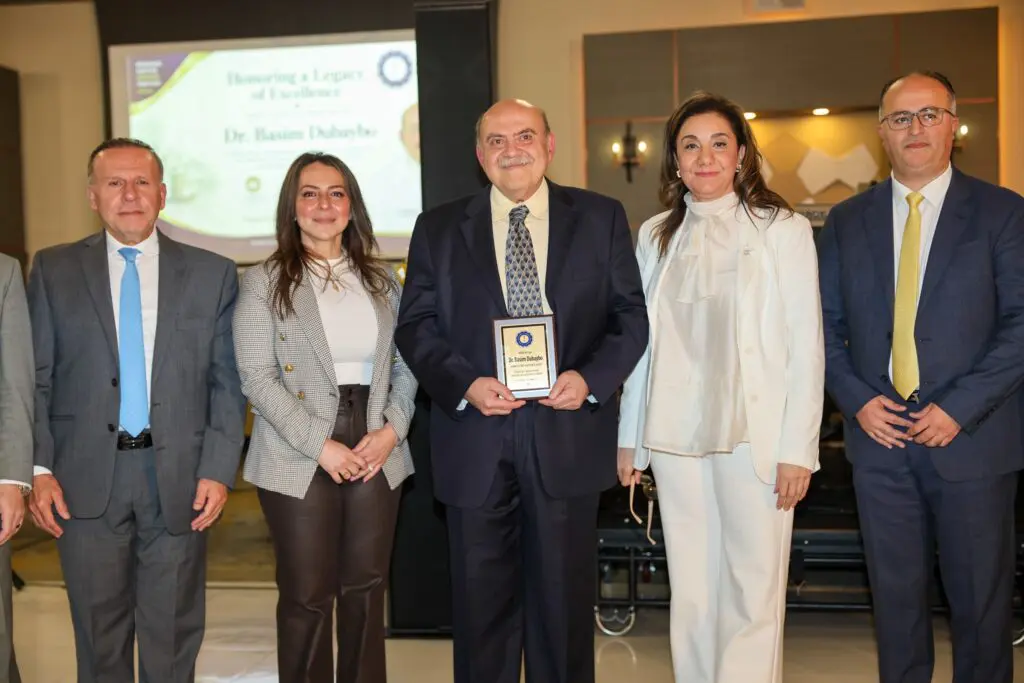
Dr. Basim Dubaybo received the NAAMA’s Lifetime Achievement Award
The Lebanese American physician previously served as the NAAMA’s national president, playing a pivotal role in organizing major conferences designed to build cooperation, facilitate the exchange of medical expertise and promote continuing education between Arab physicians in North America and their colleagues in the Middle East.
In his remarks, NAAMA Michigan President Dr. Tamam Mohamad, who is preparing to assume the national association’s presidency, reviewed the chapter’s achievements during his two years of leadership.
He explained that the association has focused its community efforts on helping families and supporting medical students, guided by its belief that “direct investment in healthcare and education can make a real and lasting difference in the lives of individuals and communities.”
The Syrian American physician highlighted the association’s humanitarian and relief work, recalling the vital medical assistance and emergency supplies it provided to families affected by the devastation in Gaza and southern Lebanon.
He said containers of health supplies and medical equipment had been shipped, alongside academic and financial support for 15 students from Gaza, to help them complete their medical studies at the American University of Beirut.
Dr. Tamam Mohamad, president of NAAMA
At its core, medicine is a noble humanitarian mission concerned with saving lives and alleviating suffering before it is merely a profession or a technical practice. — Dr. Tamam Mohamad
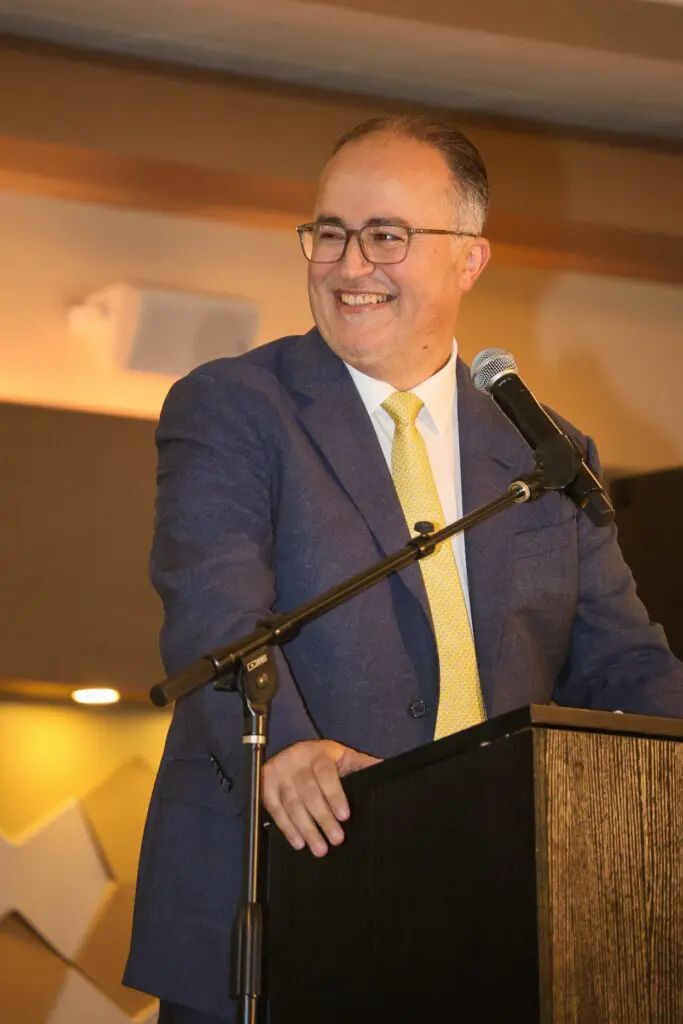
Mohamad, an internationally distinguished cardiologist and one of Michigan’s best-known specialists in cardiology and interventional procedures, said the NAAMA had embraced a leading community role and humanitarian responsibility.
That commitment included financial support for the recently opened ACCESS Recovery Center in Dearborn, which provides treatment and rehabilitation for people struggling with drug addiction.
He also highlighted the association’s specialized workshops supporting students and their academic careers at various universities, along with its success in strengthening professional relationships and cooperation among physicians.
Those efforts, he said, have helped build “a cohesive and exceptionally active medical community.”
Mohamad explained that the association’s staff and members had worked together to overcome logistical obstacles, ensuring the delivery of aid and continued academic support for students and future generations.
“At its core, medicine is a noble humanitarian mission concerned with saving lives and alleviating suffering before it is merely a profession or a technical practice,” he said.
Keynote speaker
The evening’s keynote speaker, Dr. Wael Sakr, dean of the Wayne State University School of Medicine in Detroit, focused his address on “advancing medicine, empowering individuals and strengthening communities.”
He discussed the enduring relationship between medicine and the changing nature of communities, explaining that “the extraordinary pace of development in healthcare places a responsibility on medical professionals to update their knowledge and refine their expertise to keep pace with emerging challenges in treatment and patient care.”
Sakr said medical information now doubles every few months, making it essential to equip students with the skills to keep up with continuing digital and technological advances and remain informed about the latest scientific developments.
“The true measure and fundamental essence of a physician’s success ultimately lie in relieving patients’ pain,” he said.
Keynote speaker, Dr. Wael Sakr, dean of the Wayne State University School of Medicine.
The true measure and fundamental essence of a physician’s success ultimately lie in relieving patients’ pain. — Dr. Wael Sakr
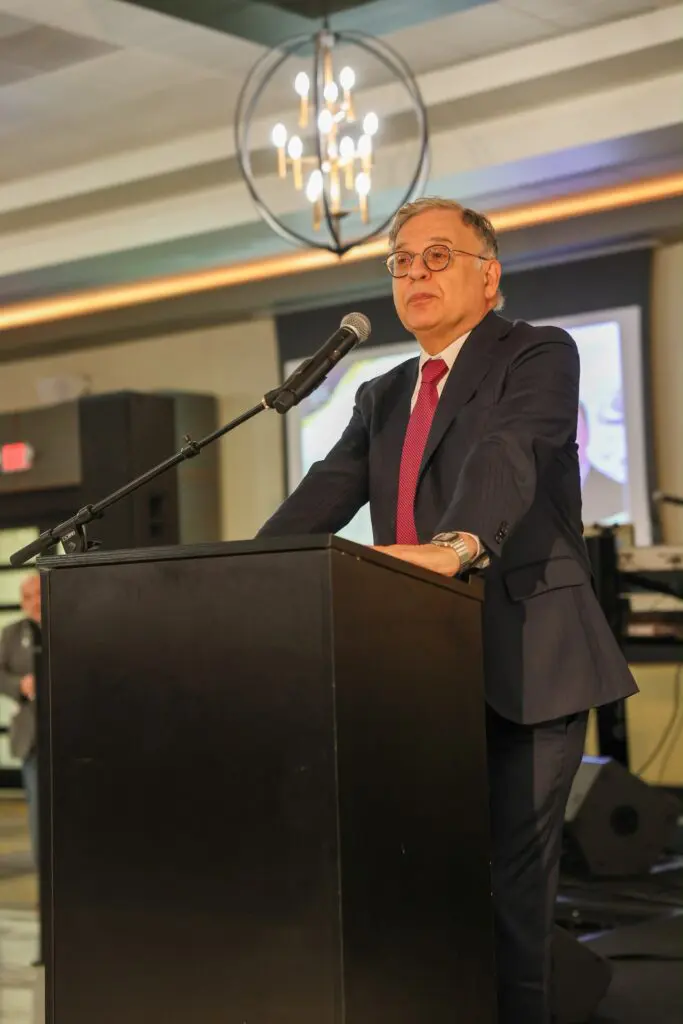
Sakr also examined the practical challenges facing healthcare, pointing to the urgent need to provide and improve services in rural areas, which cover approximately 85 percent of the United States’ geographic area.
Those communities, he said, face clear neglect and inadequate care compared with cities and major urban centers. Addressing those disparities requires reconsidering how medical services are distributed and how physicians are trained, while equipping them with the expertise, skills and knowledge necessary to reach all communities and meet growing healthcare needs.
A prominent figure in Michigan’s medical community, Sakr was introduced in the gala program as a “physician, educator and academic leader whose distinguished career reflects a commitment to excellence in medicine, research and community service.”
The program noted that he leads one of the nation’s foremost urban medical schools, dedicating his efforts to advancing medical education and patient care and preparing new generations of physicians.
It also highlighted his leadership in connecting academic institutions, community organizations and international partners through his previous presidency of the NAAMA and leadership roles in the International Academy of Pathology and the ACCESS Arab Health Summit.
Born in Syria, Sakr earned his medical degree from Damascus University in 1980 before immigrating to the United States.
Mohamad also graduated from Damascus University’s medical school, in 2003, while Dubaybo graduated from the American University of Beirut.
Meanwhile, Hassan Abdallah, vice chair of the Michigan Board of Medicine and chair of the Dearborn Board of Ethics, emphasized the importance of integrity and effective leadership in healthcare.
He urged Arab American physicians to remain connected to their culture and introduce themselves to patients using their Arabic names.
We stand on the shoulders of giants — our parents and ancestors — and we must become giants so that giants from future generations can stand on our shoulders. — Hassan Abdallah
“We stand on the shoulders of giants — our parents and ancestors — and we must become giants so that giants from future generations can stand on our shoulders,” he said.
Dr. Mustafa Hamed, chair of the Michigan Board of Medicine and medical director of emergency medicine at McKenzie Health System, stressed the importance of improving comprehensive healthcare and responding promptly to the needs of patients and communities.
He emphasized that medical professionals’ commitment to providing the highest standards of service and care today is the cornerstone of building a healthier and safer tomorrow for everyone.
Approximately 500 people attended the gala, which was emceed by Palestinian political activist and comedian Amer Zahr and featured musical and vocal performances by the National Arab Orchestra.

Leave a Reply