June 2010 - sahtak
27
type of exercise. During long bouts of intense ex-
ercise, it's best to use a sports drink that contains
sodium, as this will help replace sodium lost in
sweat and reduce the chances of developing hy-
ponatremia, which can be life-threatening.Also,
continue to replace fluids after you're finished ex-
ercising.
Environment. Hot or humid weather can make
you sweat and requires additional intake of fluid.
Heated indoor air also can cause your skin to
lose moisture during wintertime. Further, alti-
tudes greater than 8,200 feet (2,500 meters) may
trigger increased urination and more rapid
breathing, which use up more of your fluid re-
serves.
Illnesses or health conditions.When you have
fever, vomiting or diarrhea, your body loses addi-
tional fluids. In these cases, you should drink more
water. In some cases, your doctor may recom-
mend oral rehydration solutions, such as
Gatorade, Powerade or CeraLyte.Also, you may
need increased fluid intake if you develop certain
conditions, including bladder infections or urinary
tract stones. On the other hand, some conditions
such as heart failure and some types of kidney,
liver and adrenal diseases may impair excretion of
water and even require that you limit your fluid
intake.
Pregnancy or breast-feeding.Women who are
expecting or breast-feeding need additional fluids
to stay hydrated. Large amounts of fluid are used
especially when nursing.The Institute of Medicine
recommends that pregnant women drink 2.3
liters (about 10 cups) of fluids daily and women
who breast-feed consume 3.1 liters (about 13
cups) of fluids a day.
Beyond the tap: Other sources of water
Although it's a great idea to keep water within
reach at all times, you don't need to rely only on
what you drink to meet your fluid needs.What
you eat also provides a significant portion of your
fluid needs. On average, food provides about 20
percent of total water intake. For example, many
fruits and vegetables, such as watermelon and
tomatoes, are 90 percent or more water by
weight.
In addition, beverages such as milk and juice are
composed mostly of water. Even beer, wine and
caffeinated beverages — such as coffee, tea or
soda — can contribute, but these should not be a
major portion of your daily total fluid intake.
Water is still your best bet because it's calorie-
free, inexpensive and readily available.
Staying safely hydrated
It's generally not a good idea to use thirst
alone as a guide for when to drink. By the time
you become thirsty, you may already be slightly
dehydrated. Further, as you get older your body is
less able to sense dehydration and send your
brain signals of thirst. On the other hand, exces-
sive thirst and increased urination can be signs of
a more serious medical condition.Talk to your
doctor if you experience either.
To ward off dehydration and make sure your
body has the fluids it needs, make water your bev-
erage of choice. Most healthy adults can follow
these tips:
• Drink a glass of
water with each
meal and between
each meal.
• Hydrate before,
during and after
exercise.
• Substitute
sparkling water for
alcoholic drinks at
social gatherings.
• Although uncom-
mon, it is possible
to drink too much
water.When your
kidneys are unable
to excrete the ex-
cess water, the elec-
trolyte (mineral)
content of the
blood is diluted, re-
sulting in low
sodium levels in the
blood, a condition
called hyponatremia.
Endurance athletes,
such as marathon runners, who drink large amounts
of water, are at higher risk of hyponatremia. In gen-
eral, though, drinking too much water is rare in
healthy adults who eat an averageAmerican diet.
— Mayo Clinic
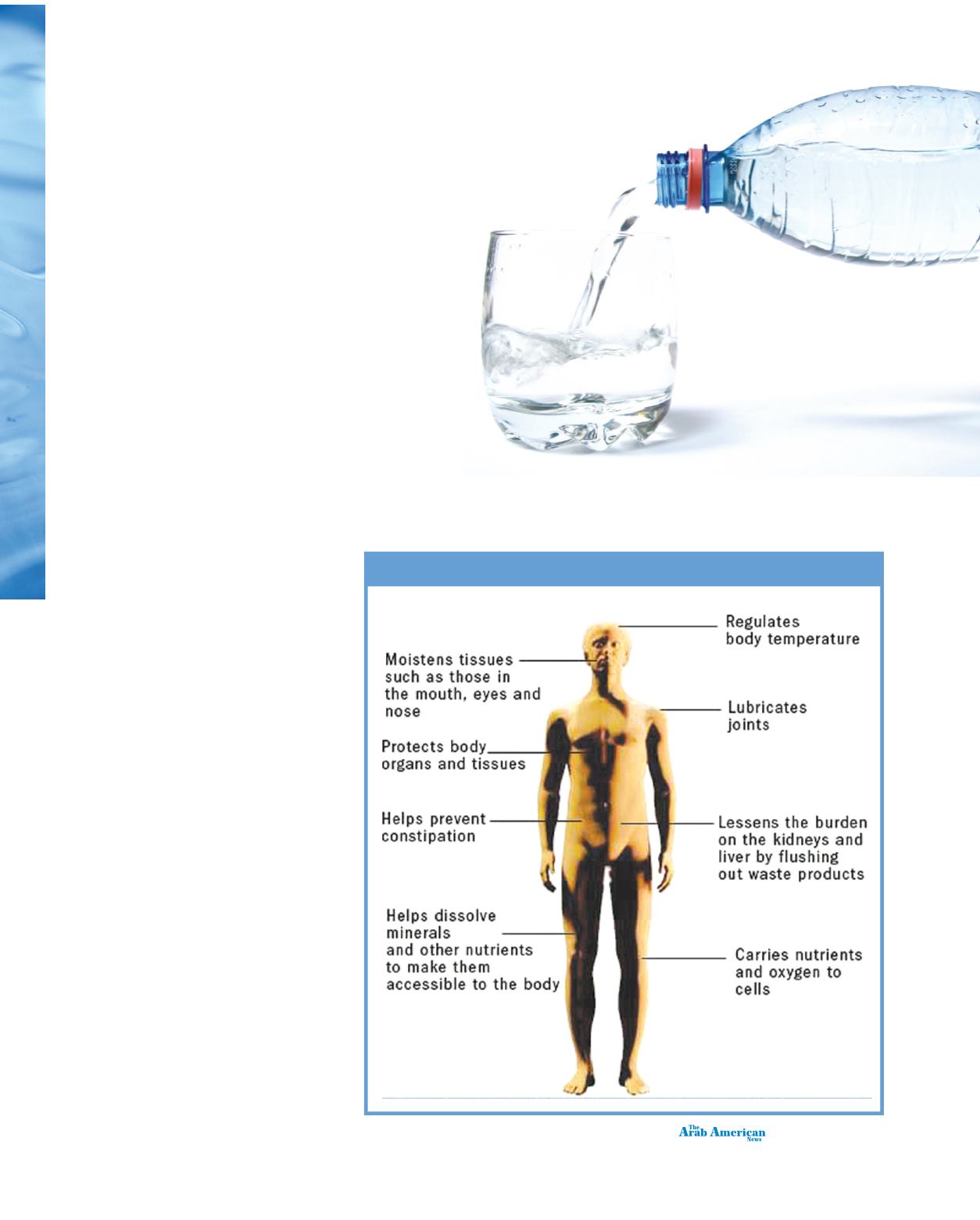
BENEFITS OF WATER
Water is your
body's principal
chemical component
and makes up about
60 percent of your
body weight. Every
system in your body
depends on water.


