June 2011 - sahtak
19
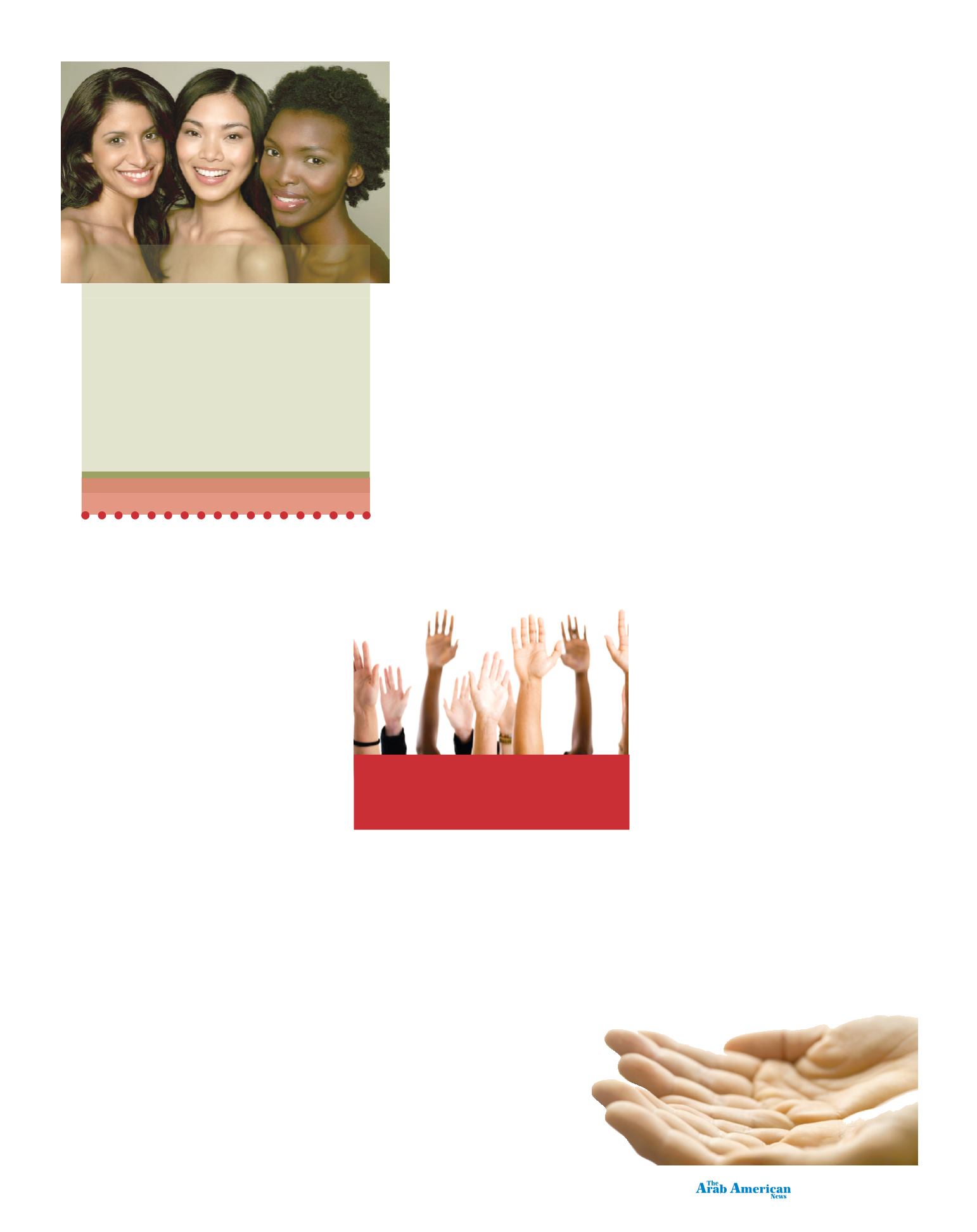
Identify your skin-tone issues
Research shows that dark spots alone can add about
10 years to your face. Your new battle plan: Pinpoint
your specific kind of splotches, and then turn back the
clock with the latest spot-zapping treatments.
Do you have sun spots?
What you see: Dark marks (aka hyperpigmentation)
from the size of a pinhead to a nickel. They usually
start out a shade darker than your skin, then darken
over time or after you're in the sun.
Why you see them: Your frenemy the sun is at it
again. When exposed to UV light, skin protects itself
by dispatching melanin, which is what gives skin color
(so essentially, a tan is a warning that the sun is dam-
aging your skin). After years of repeated UV attacks,
melanin can appear in random patches.
Do you have freckles?
What you see: Brown spots, typically smaller than sun
spots, sprinkled across your nose, cheeks or forehead.
You've probably had them since you were a kid. They
may fade with age.
Why you see them: Your skin has particularly active
and possibly larger melanocytes, cells that boost the
production of melanin shortly after sun exposure. "No
one fully understands the difference between freckles
and sun spots, but freckling appears to be inherited,"
says David McDaniel, M.D., assistant professor of
clinical dermatology at Eastern Virginia Medical
School.
Do you have melasma?
What you see: Brown patches that seem as if all your
freckles have merged together, usually on your fore-
head, cheeks or upper lip. They may show year-round
but worsen after sun exposure.
Why you see it: This common skin condition is asso-
ciated with high levels of hormones such as estrogen
from pregnancy or birth control. Add UV light and
your melanin kicks into overdrive. But why do you get
melasma and your BFF doesn't? It may simply come
down to genetics.
Do you have postinflammatory hyperpigmentation?
What you see: Scarlike discoloration that remains
after a pimple, cut or burn goes away.
Why you see it: Inflammation triggers changes in cell
signaling, causing a flurry of erratic melanin produc-
tion. (So getting acne, irritation and cuts to heal
ASAP is a must.) PIH is another condition you can
thank Mom and Pop for. And your skin color plays a
role: PIH is one of the top dermatologic diagnoses for
African Americans; it's not even among the top 10 for
Caucasians.
Do you have general blotchiness?
What you see: A dull complexion that doesn't look ra-
diant, no matter how much you exfoliate.
Why you see it: Consider this the in-between stage be-
fore noticeable sun spots emerge. You've got the UV
damage, but so far only small amounts of excess
melanin are popping up in skin cells, mostly near the
surface, causing skin to lose luminosity. Glowing skin
could be only one layer away!
Time to see a pro?
Topical treatments are better than ever, but if you
aren't seeing results or are after the best possible sce-
nario in the shortest amount of time—say, your high
school reunion is in two weeks versus two months—
you can't beat lasers.
LOOK
YOUNGER
INSTANTLY
O
ur bodies are pretty good at sending out red flags when
something’s wrong with our health—such as a fever due
to infection or itchy hives from an allergic reaction. But
sometimes the signs are misleading or easy to miss, even when
they’re on one of the body parts you look at most: your hands!
For instance, did you know that the length of your fingers, the
state of your nails and even the shade of your palms, can help
predict you how healthy you’ll be in the future? Check out these
little hand signals, and if anything sounds familiar, see your doc
today—a bright and healthy future is up for grabs!
Swollen Fingers
WHAT THEYMEAN: We all know that salty snacks and PMS
can cause bloat. But if you shun the shaker and your rings still
don’t fit, and if your period isn’t due soon, this kind of swelling
could suggest hypothyroidism, which means the thyroid gland is
underproducing the hormones you need to regulate your metab-
olism and keep your body functioning properly. Thyroid prob-
lems can lead to a sluggish metabolism, weight gain and water
accumulation, explains Jenny Kim, M.D., a dermatology pro-
fessor at the University of California in Los Angeles. Untreated
hypothyroidismcan cause fatigue, low libido and even (at extreme
levels) heart failure. A simple blood test will show if your thyroid
is underperforming, and doctor-monitored synthetic hormone
pills can help your hormones—and your fingers—return to nor-
mal.
Red Palms
WHAT THEY MEAN: Itchy, burning red palms may point to
eczema, a chronic skin disorder that can worsen when you’re
stressed; to limit irritation, avoid potential chemical triggers by
opting for soapless cleansers andwearing gloves when cleaning or
gardening. If those don’t help, redness could indicate an allergy
to nickel in jewelry, chemicals in products, or antibiotics (and
symptoms might show up on other parts of your body beyond
the palms of your hands). Such allergies are usually more an-
noying than ominous, but your physician can tell for sure by
doing a patch test and pinpointing what to avoid, Dr. Kim says.
One exception: If you’re pregnant, don’t sweat red palms. During
pregnancy, blood flow increases throughout the body, causing
temporary redness in more than half of expectant women.
Pale Fingernails
WHATTHEYMEAN: "Nails should turnwhite when you press
on them, then return to pinkish when you release," says Anthony
Martinez, M.D., assistant clinical professor of medicine at the
University of California in SanDiego. "If your nail stays white for
more than a minute or two, you may have anemia or low iron."
Iron deficiency can lead to fatigue or, in serious cases, heart prob-
lems, so you’ll want to alert your doctor. To dodge a deficiency,
fill up on iron-rich foods (such as lean meats, spinach and other
dark green veggies, legumes, and nuts and seeds like almonds and
pumpkin seeds) and foods with vitamin C, which aids iron ab-
sorption.
Numb, Blue Fingertips
WHAT THEYMEAN: Blue-hued fingers may signal a
condition called Raynaud’s disease, a temporary blood
vessel spasm that constricts blood flow to the fingers
(hence the numbness) and occurs in five to ten per-
cent of all people. "It's more common in women and
typically triggered by cool temperatures or stress," Dr.
Martinez says. Raynaud's is chronic, but it's not a huge
healthworry unless numbness lasts more than an hour, in
which case your fingers are actually imperiled—head to the
ER! Stave off a crisis by keeping circulation healthy: Cut out
cigarettes and go easy on caffeine, as both constrict blood vessels,
and hit the gym regularly to keep your blood pumping.
Discolored Nails
WHAT THEY MEAN: Off-color nails can result from fungus
but may also warn of diabetes. "Diabetics' immune and vascular
systems can be impaired, creating an environment that allows
bacteria and fungi to flourish," Dr. Kim says. Look for green dis-
coloration (yikes!) or thick, dark-yellownails that detach from the
bed (double yikes!). YourM.D. can tell you about habits that keep
blood sugar in check, such as swapping out processed foods for
healthy complex carbs. If there's fungus, prescription meds can
help clear it up; it not, nails might be yellow from dark polish.
Applying tooth-whitening products to nails can help.
Short Index Fingers
WHAT THEY MEAN: Women with pointer fingers smaller
than their ring fingers may have a heightened risk for osteoarthritis
and polycystic ovarian syndrome, a hormonal disorder that can
disrupt fertility. The upside? A lower risk for heart disease. “More
exposure to testosterone in utero, which relates to skeletal health,
fertility and cardiovascular development, may also create longer
ring fingers,” says John Manning, Ph.D., author of The Finger
Ratio. “But don’t regard your ratio as a definite indicator of
risks—or immunity to them.” Controlling your weight protects
your joints, fertility and heart, regardless of finger length. Aim
for a body-mass index between 18.5 and 25.
—Self.com
What your hands reveal about your health
Figh ng wrinkles isn't the only way to
look younger. Self magazine offers the
following ps...
Did you know that the length of your fingers,
the state of your nails and even the shade of
your palms can help predict you how healthy
you’ll be in the future?


