



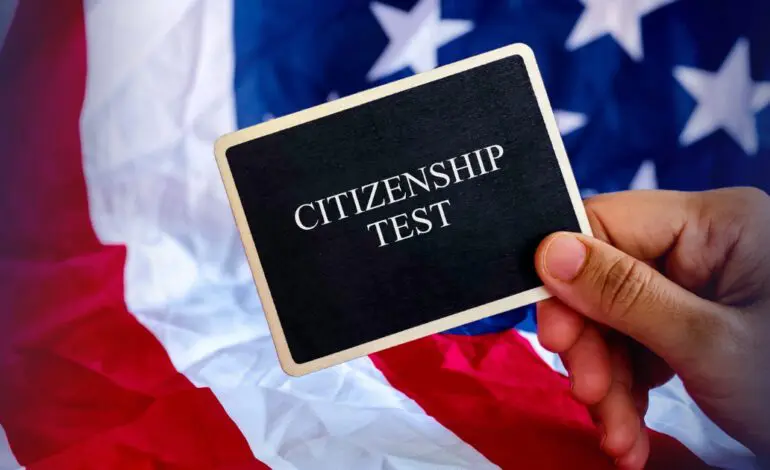

WASHINGTON, D.C. — On October 20 the U.S. Citizenship and Immigration Services (USCIS) started implementing new changes introduced by President Trump’s administration to the oral portion of the U.S. naturalization test.
Under the revised rules for the civics test, which measures green card holders’ knowledge of U.S. history, government and policies, applicants will now be required to answer 12 questions correctly out of 20, instead of the previous 6 correct answers out of 10, a standard that had been in place since 2008.
The pool of potential questions will also expand from 100 to 128, a move described by critics as an attempt by the Trump administration to make citizenship harder to obtain.
According to Matthew Tragesser, a USCIS spokesperson, the new exam will ensure “the full integration of those who join us as citizens and who will contribute to strengthening America’s standing.”
This measure is part of several changes enacted by the administration. Some questions about U.S. holidays and geography, as well as others requiring short factual answers, will be reduced or removed — replaced by more complex questions.
We need to know more — especially if we truly want to determine whether an individual has a genuine commitment to the Constitution. — Joseph Edlow, director of the USCIS
Applicants will also be required to convince immigration officers that they possess “good moral character.” Under the new procedures, they must present evidence of “positive contributions to American society.” USCIS officers will conduct more rigorous background checks, which may include interviews with co-workers, family members or neighbors.
The changes have been met with strong objections from immigration advocates, who argue that they add new obstacles to an already difficult and complicated process, particularly for those with limited English literacy or without access to preparatory materials or classes.
Opponents also warn that the naturalization process could become more subjective, given the lack of clear criteria for evaluating “good moral character.” They accused the Trump administration of attempting to limit immigrants’ ability to obtain citizenship and establish permanent lives in the United States.
For his part, Joseph Edlow, director of the USCIS, defended the revisions, saying the previous version of the test was “too easy” because some questions required only simple answers.

Leave a Reply