



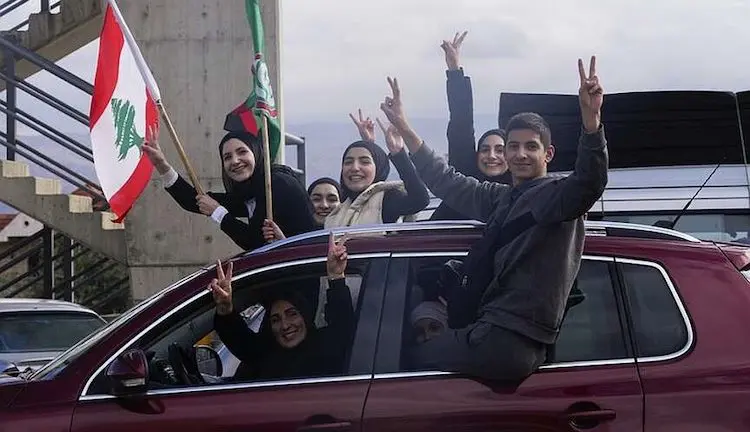

Any serious negotiation requires a minimum level of stability, credibility and mutual restraint. Right now, none of those conditions exist between Lebanon and Israel. To push for talks in the middle of ongoing bombardment and occupation in southern Lebanon and the continued killing of civilians is not diplomacy — it risks becoming coercion dressed up as dialogue.
To push for talks in the middle of ongoing bombardment and occupation in southern Lebanon is not diplomacy, it risks becoming coercion dressed up as dialogue.
At the most basic level, negotiations are supposed to occur between parties that can engage one another without immediate, overwhelming force shaping the outcome. When airstrikes, artillery fire and cross-border attacks are ongoing, the balance shifts dramatically. One side is effectively negotiating under pressure, not from a position of sovereignty, but from a position of survival. That kind of environment undermines the legitimacy of any agreement that might emerge. It raises a simple but critical question: is Lebanon negotiating because it chooses to, or because it is being forced to?
There is also the issue of civilian harm. Reports of casualties in southern Lebanon fundamentally change the moral and political landscape. Civilian deaths are not just tragic, they harden public opinion, deepen distrust and make compromise politically toxic. No Lebanese government can credibly negotiate while its population is under fire without appearing detached from its own people. Doing so risks internal backlash and further instability at a moment when the country can least afford it.
The international context only deepens the dilemma. A growing number of states have distanced themselves from Israel and raised questions of legal accountability for its leadership, including Prime Minister Benjamin Netanyahu. Discussions tied to the International Criminal Court have intensified, with some governments signaling that Netanyahu could face arrest if he enters their jurisdiction. The fact that Netanyahu is now widely viewed in parts of the international arena as a wanted figure further complicates the optics of any engagement. For Arab states in particular, meeting with him under these conditions risks being interpreted as a form of political rehabilitation at a time when allegations of war crimes remain active and unresolved.
For Lebanon, entering negotiations under these circumstances carries diplomatic risks beyond the battlefield. It could be interpreted as a sharp divergence from a growing international posture that emphasizes accountability and pressure rather than normalization. Whether or not that interpretation is fair, perception matters in international politics. Moving toward talks while others are escalating legal and diplomatic measures could be viewed by those states as undercutting their stance — potentially straining Lebanon’s own international relationships at a time when it can ill afford further isolation.
There is also a more immediate political calculus at play. Negotiations, especially if they occur while military operations continue, can serve the interests of Benjamin Netanyahu by allowing him to project an image of control and victory to domestic and international audiences. Even the optics of talks can be framed as a sign that military pressure has forced concessions. At the same time, there is little indication that Netanyahu is prioritizing a ceasefire; rather, his approach suggests a view that Lebanon must first “pay a price” before any de-escalation is seriously considered. For Lebanon, participating under fire risks feeding into that narrative, regardless of the substance — or lack thereof — of any actual agreement.
Internally, the Lebanese political landscape further complicates the picture. Some factions within the opposition appear deeply focused on weakening Hezbollah, at times treating that objective as an end in itself. But a strategy driven primarily by the desire to see one actor discredited can overlook the broader national interest. Negotiations undertaken in that spirit risk becoming less about securing stability for Lebanon as a whole and more about settling internal scores — an approach that could deepen divisions rather than resolve them.
Lebanon should secure a full withdrawal and a genuine ceasefire first, then negotiate from a position that reflects sovereignty, not survival.
Even the core demand often invoked — Israeli withdrawal to internationally recognized borders — is unlikely to come cleanly. From Israel’s perspective, withdrawal would likely be tied to a broader political arrangement, potentially extending beyond simple normalization to include security alignment against Hezbollah. Such terms would not merely end a cross-border conflict; they could reconfigure it into an internal Lebanese confrontation, effectively shifting the burden of conflict internally into a civil war rather than resolving it.
History shows that negotiations conducted during active violence rarely produce durable outcomes. Agreements reached under duress tend to collapse once the immediate pressure is lifted, because they are not rooted in genuine consensus. Instead, they often sow the seeds for future conflict. For Lebanon, a country already burdened by political fragmentation and economic crisis, entering into talks under these conditions risks locking in terms that could be seen as illegitimate or imposed, terms that future governments or factions may reject outright.
None of this argues against diplomacy. It argues for sequencing. A credible process must begin with a ceasefire and a halt to bombardment and withdrawal, not run alongside it. Only then can negotiations reflect choice rather than coercion.
Without a halt to hostilities and occupation, negotiations are unlikely to resolve anything — and may deepen the very conflict they are meant to end.
Lebanon should be clear-eyed. The government’s priority must be straightforward: secure a full withdrawal and a genuine ceasefire first, then negotiate from a position that reflects sovereignty, not survival.
In the end, diplomacy cannot function in the shadow of ongoing bombardment and occupation. If negotiations are to have any chance of success, they must be built on a foundation that includes a halt to hostilities, respect for civilian life, withdrawal and clear terms that do not simply repackage conflict under a different name. Without that, talks are unlikely to resolve anything — and may, in fact, deepen the very conflict they are meant to end.
– Jamal I. Bittar is a university professor and opinion writer focused on Middle East politics and U.S. foreign policy. He is based in Toledo, Ohio. The views expressed are solely his own and do not represent those of any institution with which he is affiliated.


Leave a Reply