



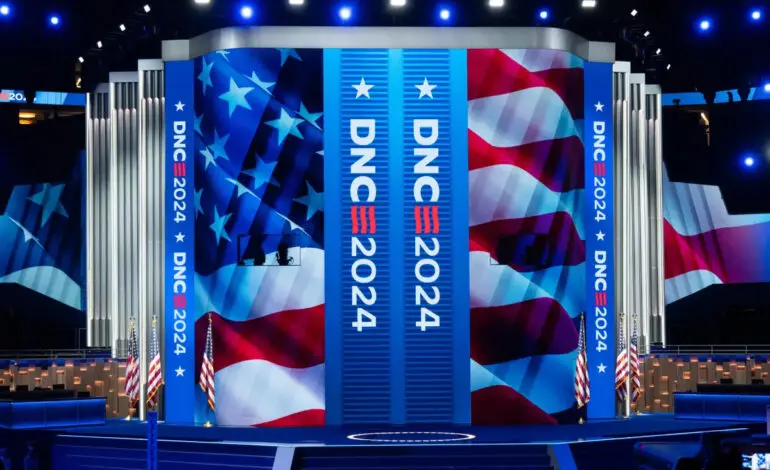

A number of sub-plots undergird the drama that erupted over the Democratic National Committee Chair Ken Martin’s release of an incomplete “autopsy” of the 2024 election.
First, I’ll note that I don’t envy the dilemma in which Martin found himself. Martin had promised to deliver an in-depth examination of what went wrong in 2024 and lessons the party could learn from these mistakes. He commissioned the study but didn’t receive a draft until the end of 2025. And what he received was a disaster — woefully incomplete, poorly sourced and a mish-mash of information and data without direction, conclusions or actionable recommendations.
Young people, people of color, progressives, and yes, Arabs and Muslims — had been demoralized by President Biden’s enabling of Israel’s genocide in Gaza.
Because Democrats had already recorded a string of victories in 2025 and were gearing up for critical 2026 midterm congressional elections, Martin decided against completing or releasing the study. At that point, it was a sound judgement. It wouldn’t have served any useful purpose to order its completion with a release occurring amid the 2026 election season, diverting attention from helping Democrats take control of Congress.
With the decision against release, two distinct currents of thought emerged. One was ideological, masking itself as principled, asking “What are you hiding?” while claiming to know the answer. The other was practical: “We know why we lost and now we’re winning elections, so why bother raking over old coals?”
I confess to being in the latter camp. I’d done a number of in-depth press interviews on the 2024 election, conducted my own polling and interviews and written extensively on why Democrats lost. As so many others had as well, I felt that an autopsy (or rather, autopsies) had been done. What we knew was clear: Biden should have stepped down earlier, giving Democrats time to regroup and possibly have a mini-primary; and the political-consultant class running the Harris campaign were out of touch with the electorate, risk-averse and unimaginative, and more interested in using the campaign for lucrative advertising contracts than in direct voter contact.
The political-consultant class running the Harris campaign were out of touch with the electorate, risk-averse and unimaginative, and more interested in lucrative advertising contracts than in direct voter contact.
One by-product of these failures was the consultant’s inability to understand how many voters — young people, people of color, progressives, and yes, Arabs and Muslims — had been demoralized by President Biden’s enabling of Israel’s genocide in Gaza. The consultants also failed to grasp and address the angst of working class and rural voters in Pennsylvania, Ohio, Michigan and Wisconsin. Instead of focusing on them, the campaign wasted days and resources courting Liz Cheney whom they thought would win support from moderate, suburban, Republican women (as if she could).
With much of this analysis already done, another autopsy wasn’t needed. Nevertheless, the pressure on Martin to release the study continued to mount. As the chorus of critics grew louder, Martin confronted a “damned if he did, damned if he didn’t” choice. To silence the critics, he reluctantly agreed to release the draft with caveats, noting that: he’d received it too late; it didn’t meet his standards and would’ve taken too long to finalize; and he didn’t agree with its contents or omissions.
As the loudest critics were fellow Democrats, Martin might have assumed good will would prevail and the criticism would subside. However, the harshest critics actually weren’t interested in getting policy or politics right for the next election — nor advancing a pro-Palestinian position in the Democratic Party. What they wanted was Martin’s job and so their criticism continued, coupled with calls for Martin to step down.
The harshest critics actually weren’t interested in getting policy or politics right for the next election — what they wanted was Martin’s job.
Many leading critics had opposed his candidacy in the first place. Others were of the “consultant class” — operatives who make their money running campaigns and were upset that Martin was redirecting Democratic Party funds from them to state parties as part of his strategy to rebuild the party from the bottom up. Others were donors, who prefer the top-down status quo to Martin’s approach of empowering states, party members and grassroots Democrats. Finally, some were operatives from Obama’s era, who were never committed to building the party and saw an opportunity for social media clicks.
To date, with the context of these subplots, the members of the Democratic National Committee have continued to support Martin. They know he wasn’t responsible for the 2024 fiasco. And while they can find fault in the way the “autopsy release” was handled, they back his approach to party building.
– Dr; James Zogby is the founder and president of the Washington based Arab American Institute (AAI)



Leave a Reply