



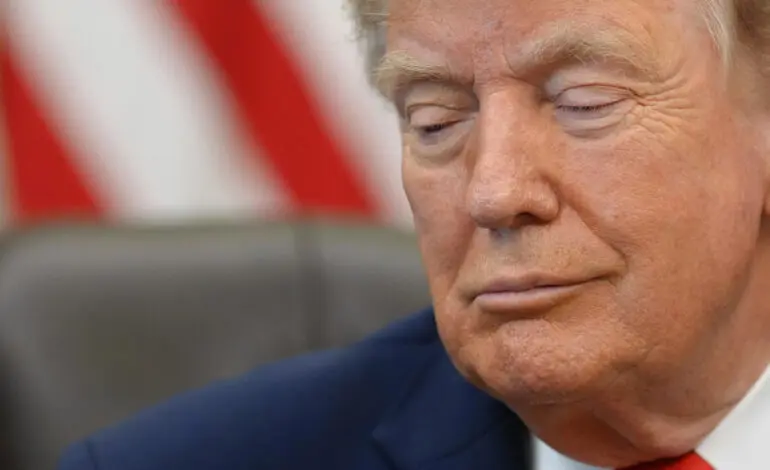

WASHINGTON / TEHRAN / BEIRUT — After a week marked by military confrontation and intense diplomacy, President Trump announced what he described as a “great settlement” with Iran, signaling a potential turning point in a conflict that had threatened to engulf the broader Middle East.
The announcement followed two nights of military exchanges between the United States and Iran, including Iranian strikes against American facilities in the region and earlier missile attacks targeting Israel. The developments intensified fears of a wider regional war before diplomatic efforts appeared to gain momentum.
Speaking at a political rally, Trump said negotiations had produced a framework agreement supported by multiple regional and international partners, including Saudi Arabia, the United Arab Emirates, Qatar, Turkey, Pakistan, Bahrain, Kuwait, Jordan and Egypt.
“We ended the war with Iran today,” Trump declared, describing the emerging arrangement as a “great settlement” and indicating that final documents were being prepared for signature.
According to Trump, the agreement would include commitments regarding Iran’s nuclear program and could lead to the reopening of the Strait of Hormuz, one of the world’s most strategically important energy corridors.
Iranian officials, however, offered a more cautious assessment. While acknowledging unprecedented progress in negotiations, Tehran emphasized that no final agreement had yet been reached and that key issues remained unresolved.
Diplomatic breakthrough follows months of escalation
The apparent breakthrough came after months of military tensions, economic pressure and indirect negotiations that repeatedly stalled over core disagreements.
Regional mediators, particularly Qatar, played a significant role in reviving discussions. Reports indicate that high-level meetings in Doha helped bridge differences between Washington and Tehran, including discussions surrounding frozen Iranian assets and broader regional security arrangements.
Analysts caution that a memorandum of understanding, if finalized, would not necessarily resolve the underlying disputes between the two countries. Sensitive issues involving security guarantees, economic sanctions, regional influence and nuclear restrictions could remain subjects of future negotiations.
As a result, many observers view the current effort less as a comprehensive peace agreement and more as a framework designed to manage tensions and prevent a return to open conflict.
Lebanon reportedly included in broader understanding
One of the most significant aspects of the reported negotiations concerns Lebanon.
According to regional media reports, Iranian negotiators sought and received assurances that Lebanon would be included in any broader regional arrangement.
Sources familiar with the discussions indicated that the proposed framework goes beyond a simple ceasefire and could include measures aimed at ending hostilities, accelerating Israeli withdrawal from Lebanese territory, halting demolition and military operations, and addressing the issue of detainees.
While neither Washington nor Tel Aviv has publicly confirmed such details, reports that Lebanon was incorporated into the negotiations generated considerable attention across the region.
Israeli concerns emerge
The prospect of a U.S.-Iran understanding reportedly generated unease within Israeli political and security circles.
Israeli officials had spent recent weeks discussing possible military options and reportedly sought stronger action against Iran following renewed tensions in the region.
Prime Minister Benjamin Netanyahu responded cautiously to Trump’s announcement, stressing that Israel was not a party to the emerging understanding while expressing hope that any final agreement would address concerns regarding Iran’s nuclear activities, missile capabilities and regional alliances.
Israeli media reported that some officials viewed the inclusion of Lebanon in the broader diplomatic framework as a setback to military options previously under consideration.
Pressure on both sides
The latest developments underscore the growing pressure facing both Washington and Tehran.
Iran has sought relief from economic restrictions and maritime pressure while avoiding the appearance of making concessions on core national interests.
At the same time, the United States has faced mounting pressure to reduce the economic and political costs associated with prolonged regional instability, including disruptions affecting global energy markets and international shipping routes.
Iranian Foreign Ministry spokesperson Esmail Baghaei emphasized that negotiations remain incomplete, describing many public reports as speculation. He nevertheless acknowledged that substantial portions of the negotiating text had already been drafted.
Iranian officials also maintained that Tehran had not retreated from what it considers its fundamental negotiating positions.
A fragile opportunity
Despite the optimistic tone adopted by President Trump, significant uncertainties remain.
The path from a preliminary understanding to a durable agreement is often complicated by political opposition, implementation challenges and unresolved disputes.
Nevertheless, the diplomatic momentum generated over the past week represents one of the most significant openings in U.S.-Iran relations in recent years.
For Lebanon and the broader Middle East, the success or failure of these negotiations could help determine whether the region moves toward greater stability or returns once again to the brink of a wider conflict.


Leave a Reply