



There was an unfortunate series of events which took place last week, which have renewed conversations in Metro Detroit regarding tensions between Arab American and African American communities. An incident in the Warrendale neighborhood in Detroit involving an Arab American woman involved in a hit and run car accident with an African American woman, which also included her purse reportedly stolen out of her car afterwards by someone on the scene. This incident mushroomed into a confrontation a couple of days later involving African Americans confronting Arab Americans at the scene of the hit and run. During the confrontation, an Arab American man hurled profanity and the N-word towards African Americans, which was video recorded. Two Arab Americans were subsequently arrested based upon these events. The video from the latter incident went viral on social media, which then led to media stories in a local newspaper, television and radio. In the process, the events were framed by some in the media as Muslims committing offenses against African Americans.
In the process, the events were framed by some in the media as Muslims committing offenses against African Americans.
The painting of relations between Arab Americans and African Americans by some talking heads and even in one mainstream media professional as a conflict between Muslims, a religious group, and African Americans, an ethnic group, is completely incorrect, especially relating to the recent situation in Warrendale. For starters, Arab Americans constitute a numerical minority of the Michigan Muslim community, and a significant percentage of Arab Americans in Michigan are Christians. Moreover, thousands of African Americans in our region, including the Wayne County treasurer, two judges in Wayne County to other community leaders are Muslims. The recent incidents which just took place were not motivated by religion, nor was the religion of the African American woman ever mentioned in police and media reports.
The recent incidents which just took place were not motivated by religion, nor was the religion of the African American woman ever mentioned in police and media reports.
However, as an African American Muslim, who has lived in Metro Detroit for 28 years, I am keenly aware of the latent tensions between segments of each community and that those tensions require more effort to be rectified. Back in September 2013, I wrote an op-ed for The Arab American News titled Fellow humans are not “abeed” due to my personally witnessing disrespectful racial slurs used by some Arab Americans against African Americans. Unfortunately, the N-word, which is a vile term with an ugly history, is commonly used these days by a lot of our youth and even some professionals in our communities.
There are, of course, positive relationships between Arab Americans and African American leaders in our region, which need to be built upon. I personally know Arab American civic and religious leaders who have personal relationships with NAACP leaders to African American politicians, activists and pastors. Part of our challenge, however, is that Metro Detroit by design is divided by invisible walls, which have had various communities segregated to this day. These walls can only be torn down by the grassroots coming together in fellowship, which will lead to better understanding and perhaps future possibilities for mutual social, economic and political benefits.
These walls can only be torn down by the grassroots coming together in fellowship, which will lead to better understanding and perhaps future possibilities for mutual social, economic and political benefits.
This will also lead to us seeing the wrongdoers among our communities as individuals instead of the toxic discourse that holds entire communities responsible for the immoral behaviors and crimes of individuals. A handful of politicians and community organizers being in conversation alone will not suffice as evident of how easily the Warrendale incident escalated. We must all do better in breaking out of our silos to building better relations between Arab Americans and African Americans for our collective benefit in Metro Detroit and beyond.
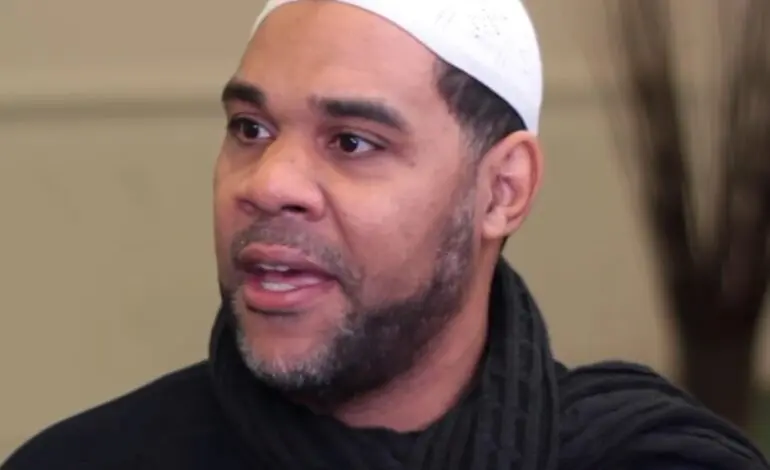
– Dawud Walid is currently the executive director of the Michigan chapter of the Council on American-Islamic Relations (CAIR-MI) and a founding member of the Imams Council of Michigan.
Leave a Reply