




DETROIT — A lawsuit seeking to block a proposed property tax millage for public transportation in Wayne County suffered a major setback last week after a Wayne County Circuit Court judge refused to remove the measure from the ballot for the Aug. 4 election.
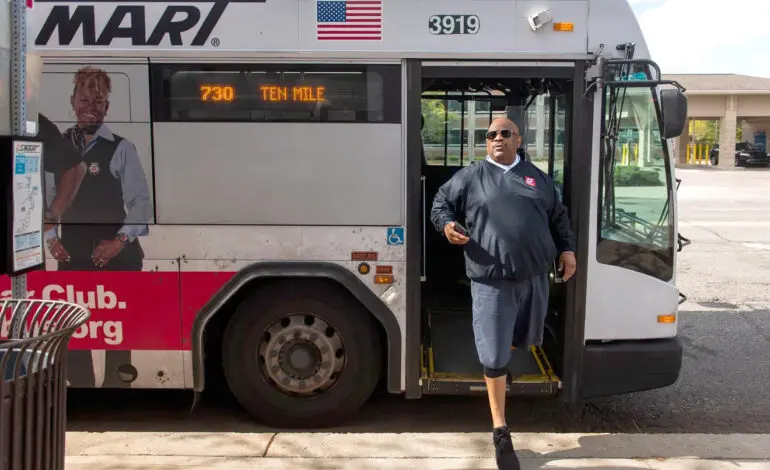
The ruling by Judge Kathleen McCarthy dealt a blow to the efforts of a citizen group known as Not SMART Wayne, which sought to prevent voters from considering a countywide transit funding proposal that would support the Suburban Mobility Authority for Regional Transportation (SMART) bus system throughout Wayne County’s 43 cities, townships and villages.
If approved, the proposal would establish a countywide property tax of one mill, equivalent to $1 for every $1,000 of taxable property value, to fund SMART bus services for a period of 10 years.
County officials estimate the tax would generate approximately $57.6 million during its first year, with a projected total of $570 million in 10 years.
The lawsuit, filed last month, alleged that Wayne County officials violated Michigan’s Open Meetings Act in the process leading up to the placement of the proposal on the ballot. The legal challenge came just weeks before absentee ballots are scheduled to be mailed to voters beginning June 25.
Attorneys representing Not SMART Wayne argued that the Wayne County Transportation Authority failed to provide adequate public notice for a March 19 meeting during which the ballot language was drafted. The group contended that the alleged lack of notice constituted a violation of Michigan’s Open Meetings Act.
The lawsuit also claimed that the ballot language itself was misleading, biased and unlawful.
Judge McCarthy ultimately rejected those arguments, allowing the proposal to remain on August 4 ballot.
Matthew Wilk, a Wayne County resident listed among the plaintiffs in the lawsuit, expressed disappointment with the ruling.
“We are disappointed in the judge’s decision, despite her acknowledgment that Wayne County did only the bare minimum in announcing the meeting and likely should have created a dedicated website for the process,” Wilk said. “All of this reinforces the fact that the average Wayne County resident had no idea this meeting was taking place.”
Wilk indicated that an appeal of the ruling remains a possibility.
First countywide vote for former opt-out communities
The court’s decision means residents in 17 Wayne County communities will vote for the first time on a countywide public transit funding proposal this August.
For decades, those communities, including Livonia, Canton Township, Plymouth and Northville, exercised their ability to opt out of SMART transit millages and decline participation in the regional bus system.
Since the first SMART transit funding election in Wayne County in 1995, those 17 communities had consistently avoided participation in transit funding votes.
That changed in 2024 when state lawmakers approved legislation eliminating the opt-out provision for local governments. The law took effect in early 2025 after being signed by Governor Whitmer.
County leaders welcome decision
Wayne County Executive Warren C. Evans praised the court’s ruling and rejected claims made in the lawsuit.
“Contrary to the allegations advanced in this lawsuit, there was never any failure to comply with the Open Meetings Act, nor were there any violations of Michigan election or tax laws,” Evans said in a statement. “The court affirmed that conclusion in its ruling.”
He added that misleading voters has never been part of the county’s strategy.
“Misleading voters has never been a tactic we employ, nor would such a tactic serve our efforts in any way,” Evans said.
Supporters of the proposal argue that expanding and stabilizing public transit funding is essential for seniors, people with disabilities, residents with special transportation needs and those who do not drive.
Evans and Wayne County Deputy Executive Assad Turfe have said the average household would pay approximately $8 per month under the proposed millage, a cost they view as reasonable given the importance of public transportation services.
“We categorically reject the baseless allegations and false claims made in this frivolous lawsuit and remain confident the facts and truth will come to light through the legal process,” Wayne County Deputy Executive Assad Turfe stated in a statement he released to the local media. “From day one, the Wayne County Transit Authority has been transparent and followed all disclosure and notice requirements under Michigan law. Public transit provides an affordable transportation option for tens of thousands of Wayne County residents at a time of rising gas prices and car insurance. We will not be intimidated or deterred from our mission of preserving an important lifeline for seniors and people with disabilities who cannot easily drive on their own.”
Debate over cost and value
Opponents, including members of Not SMART Wayne, argue that bus ridership remains too low to justify the tax increase and contend that fare revenues cover only a small fraction of operating costs.
They maintain that the proposed property tax would represent a poor return on investment for taxpayers.
SMART currently operates 47 fixed-route bus lines throughout the Detroit metropolitan area and provides transportation for approximately nine million passenger trips annually.
If voters approve the millage in August, Wayne County would join Oakland and Macomb Counties in providing countywide SMART transit funding.
Oakland County voters approved a similar countywide transit tax in 2022, while Macomb County has never allowed local communities to opt out of transit funding measures.
Supporters say approval of the proposal would create, for the first time, a fully integrated three-county SMART funding structure across Southeast Michigan, providing greater stability for regional public transportation services.



Leave a Reply