



One hundred and ten days after the failed U.S.-Israeli military campaign against Iran, a historic memorandum of understanding was signed remotely on June 17, between the United States and Iran to end the conflict between the two countries.
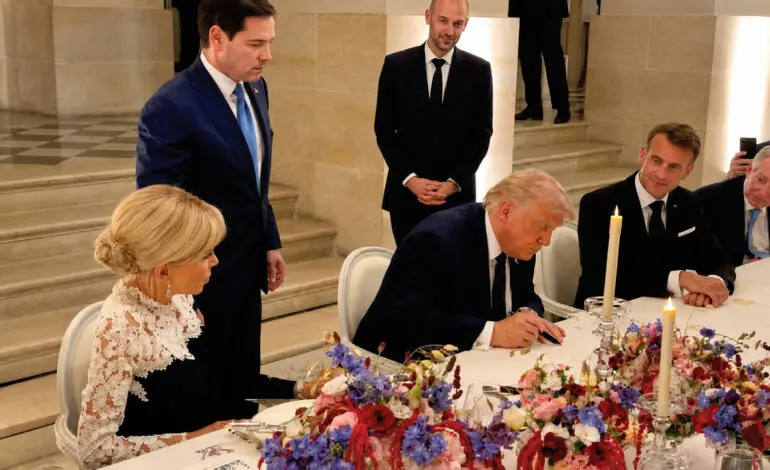
President Trump signed the agreement during a dinner at the Palace of Versailles in France following the G7 summit, while Iranian President Masoud Pezeshkian signed the document in Tehran shortly afterward. The agreement capped months of intensive mediation led by Pakistan, with support from regional powers, including Qatar, Oman, Egypt, Turkey and Saudi Arabia.
Israel pushes back as Washington and Tehran move toward final negotiations under the “Islamabad Memorandum”
The memorandum — widely referred to as the “Islamabad Understanding” — has been met with sharp criticism in Israel and is intended to serve as a 60-day transitional framework leading to comprehensive negotiations aimed at producing a final agreement to be endorsed through a binding United Nations Security Council resolution. Additional technical meetings are expected to take place in Switzerland to establish implementation mechanisms and activate joint committees tasked with carrying out the agreement’s provisions.
According to supporters of the deal, the memorandum reflects Iran’s success in advancing key elements of its vision for ending the conflict. Among the most significant provisions is the immediate cessation of military operations on all fronts, including a comprehensive and permanent halt to hostilities in Lebanon, coupled with commitments to respect Lebanese sovereignty and territorial integrity.
Israeli Prime Minister Benjamin Netanyahu, however, immediately rejected any suggestion that Israel would withdraw from southern Lebanon, declaring that Israeli forces would remain there “as long as Israel’s security needs require it.” He argued that restoring security to northern Israel necessitates maintaining what he described as a security zone inside Lebanon.
Two-track framework
The 14-point memorandum is divided into two principal tracks: an immediate military-security component and a phased economic and diplomatic component.
The military section calls for a comprehensive and permanent ceasefire across all fronts, mutual respect for sovereignty between Washington and Tehran, a commitment by both governments not to interfere in each other’s internal affairs and a pledge to refrain from threatening the use of force.
The agreement also envisions a U.S. military redeployment away from Iran’s borders, returning American forces to pre-war positions within 30 days of a final settlement.
The economic provisions focus heavily on restoring regional trade and energy flows. Iran would guarantee safe and free passage through the Strait of Hormuz for commercial shipping during the 60-day negotiation period while immediately beginning efforts to remove mines and other maritime obstacles.
In return, the United States would lift its maritime blockade of Iran immediately, with a complete end to restrictions envisioned within 30 days.
The memorandum also outlines discussions among Iran, Oman and Gulf states regarding the future administration of the Strait of Hormuz under international maritime law.
Another key provision addresses sanctions relief. The U.S. Treasury Department would issue immediate waivers allowing Iran to export crude oil and petroleum products while facilitating related banking, insurance and transportation services throughout the negotiation period.
The framework further envisions a future timetable for ending U.S. primary and secondary sanctions, as well as related United Nations Security Council measures and International Atomic Energy Agency restrictions.
The agreement also includes provisions aimed at facilitating the release and utilization of frozen Iranian assets.
One of the most controversial clauses from the Israeli perspective commits the United States to work with regional partners on a reconstruction and development initiative for Iran valued at no less than $300 billion, while providing the financial licenses necessary for its implementation.
Under the memorandum, both sides would begin intensive technical negotiations aimed at resolving outstanding disputes, most notably the nuclear issue, and reaching a final agreement within 60 days. A joint implementation mechanism would oversee compliance with the interim commitments.
The final provision stipulates that any comprehensive settlement would ultimately be formalized through a binding resolution of the United Nations Security Council.
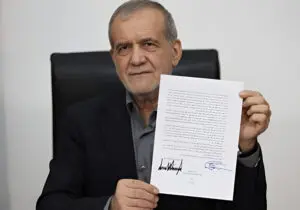
Iranian President Masoud Pezeshkian signed the memorandum of understanding between Iran and the United States in Tehran at the same time it was signed by President Trump in France. – Photo by the Iran News Agency
Competing reactions
The day after the memorandum was signed, President Trump expressed confidence that a comprehensive ceasefire would take hold across all fronts, including between Hezbollah and Israel in Lebanon.
The U.S. Central Command later announced that maritime restrictions on Iran had been lifted and that American naval forces were no longer interfering with shipping to and from Iranian ports.
Seeking to reassure Israel and its supporters, Vice President J.D. Vance emphasized that the United States would not provide financial support or permanent sanctions relief unless Iran fundamentally altered its behavior. He also pointed to the immediate reopening of the Strait of Hormuz, noting that 12.5 million barrels of oil passed through the waterway during the first night after the memorandum was signed.
Iranian Supreme Leader Sayed Mojtaba Khamenei acknowledged that he initially held reservations about the agreement but ultimately approved it after receiving assurances from President Pezeshkian regarding the protection of Iranian rights and the interests of the “Axis of Resistance.”
Khamenei emphasized that future negotiations should not be interpreted as acceptance of enemy demands and said Tehran would judge the process by whether the memorandum’s conditions were actually fulfilled.
Iran’s Supreme National Security Council subsequently announced that commercial vessels wishing to transit the Strait of Hormuz would coordinate with Iranian authorities and that no transit fees would be charged during the initial 60-day period.
Israeli anger
Few developments generated more intense opposition in Israel than the memorandum between Washington and Tehran.
Across Israel’s political spectrum, critics described the agreement as a strategic disaster that threatens Israeli security while offering Iran an economic lifeline.
Netanyahu insisted that “the battle is not over”, pledging continued efforts to prevent Iran from obtaining nuclear weapons.
Senior Israeli officials, including Defense Minister Israel Katz and National Security Minister Itamar Ben-Gvir, argued that the U.S.-Iran understanding does not bind Israel and would not prevent the Israeli military from continuing operations or maintaining its positions in southern Lebanon.
Israeli security officials also warned that the agreement rescued Iran from what they viewed as an impending economic collapse caused by maritime restrictions and argued that Tehran could exploit the 60-day negotiation window to advance uranium enrichment efforts.
Reports indicate that Israel formally requested access to the text of the memorandum but was denied by the Trump administration out of concern that details could be leaked.
Vice President Vance reportedly responded sharply to Israeli critics, remarking that “you cannot rely on killing alone to solve every problem.”
Within Israel, both opposition figures and segments of the public accused Netanyahu of suffering a major strategic setback that left Israel isolated and excluded from shaping emerging regional arrangements.
In Washington, pro-Israel organizations mounted a coordinated campaign against the memorandum. Groups that included the American Jewish Committee argued negotiations should not reduce pressure on Iran and insisted that Tehran’s ballistic missile program and support for organizations such as Hezbollah and Hamas remain central concerns.
The Democratic Majority for Israel also criticized the administration’s approach, describing it as inconsistent and unstable and arguing that the agreement weakens U.S. allies while providing Iran with substantial economic benefits without permanently eliminating its nuclear capabilities.
Trump’s defense
Trump has vigorously defended the memorandum, characterizing it as an “unconditional surrender” by Iran achieved through overwhelming American military power.
In interviews, public statements and social media posts, he argued that the agreement was necessary to prevent the conflict from triggering a global economic crisis through disruption of energy supplies and closure of the Strait of Hormuz.
Pointing to strong market performance and falling oil prices, Trump portrayed the agreement as both a political and economic success.
He emphasized that the memorandum is a framework rather than a final settlement and warned Tehran that military action could resume if the agreement is violated.
“If they do not respect the agreement, we will bomb them again,” Trump said, adding that “it is amazing what bombs can do.”
Trump maintained that the ultimate American objective remains preventing Iran from acquiring nuclear weapons while defending what he described as reasonable technical compromises in the framework.
He also argued that Iran has the right to maintain defensive capabilities and missile systems so long as they do not constitute an offensive or nuclear threat, a position that contrasts sharply with longstanding Israeli demands for the dismantling of Iran’s ballistic missile program.
Trump dismissed critics in both parties as either “foolish, hateful or jealous”, insisting that the United States negotiated from a position of overwhelming strength.
Lebanon emerges as the ultimate test
Despite the memorandum’s explicit call for an immediate and permanent cessation of military operations on all fronts, Lebanon has quickly become the most important test of whether the U.S.-Iran memorandum of understanding can survive.
Israel has continued conducting airstrikes and artillery attacks against targets in southern Lebanon, arguing that operations are necessary to dismantle Hezbollah infrastructure inside the “security zone” established south of the Nabatieh highlands.
Netanyahu has openly declared Israel’s intention to maintain a military presence in southern Lebanon and has rejected U.S. requests for an immediate withdrawal to pre-war lines.
Iran, meanwhile, has warned that continued Israeli military operations or any prolonged occupation of southern Lebanon would constitute a direct and fundamental violation of the memorandum.
An Iranian Foreign Ministry spokesperson stated that continued attacks against Lebanon or the persistence of Israeli occupation would effectively nullify the agreement and cause its collapse.
Inside Lebanon, President Joseph Aoun’s government has sought to distance the country from becoming a “bargaining chip” in broader regional negotiations.
Preparations are underway for a new round of direct talks with Israel under U.S. sponsorship on June 22-23. The discussions are expected to focus on implementing U.N. Security Council Resolution 1701 and facilitating Israeli withdrawal from designated areas to be secured exclusively by the Lebanese Army.
Hezbollah, however, has urged the Lebanese government to abandon direct negotiations with Israel, arguing that resistance on the battlefield, not diplomacy, has protected Lebanon from Israeli ambitions.
According to Israeli military figures cited in the debate, 30 Israeli officers and soldiers have been killed and 1,347 wounded since fighting resumed in Lebanon on March 2.
Lebanese Parliament Speaker Nabih Berri has reiterated Hezbollah’s commitment to a ceasefire, “so long as Israel fully and comprehensively abides by it.”
Whether the Islamabad Understanding evolves into a lasting regional settlement or joins the long list of failed Middle East agreements may ultimately depend less on the negotiating rooms of Washington and Tehran than on what unfolds in southern Lebanon over the coming weeks.
Read the 14 points of the agreement between Iran and the U.S.
- The United States of America and the Islamic Republic of Iran and their allies in the current war, by signing this MOU, declare the immediate and permanent termination of military operations on all fronts, including in Lebanon, and undertake from now on not to initiate any war or any military operation against each other, and to refrain from the threat or use of force against each other, and ensuring the territorial integrity and sovereignty of Lebanon. The final deal will confirm the permanent termination of the war on all fronts, including in Lebanon and other provisions of this paragraph.
- The United States of America and the Islamic Republic of Iran undertake to respect each other’s sovereignty and territorial integrity and to refrain from interfering in each other’s internal affairs.
- The United States of America and the Islamic Republic of Iran commit to negotiating and achieving the final deal in a maximum of 60 days, extendable with mutual consent.
- Immediately upon the signing of this MOU, the United States of America will begin the removal of its naval blockade and any disturbances or impediments against the Islamic Republic of Iran, and will fully end the naval blockade within 30 days. During this period, the traffic of vessels will be in proportion to the numbers of pre-war traffic being restored by the Islamic Republic of Iran. The United States of America further undertakes to remove its forces from the proximity of the Islamic Republic of Iran within 30 days after the final deal.
- Upon the signing of this MOU, the Islamic Republic of Iran will make arrangements using its best efforts for the safe passage of commercial vessels with no charge for 60 days only from the Persian Gulf to the Sea of Oman and vice versa. The traffic of commercial vessels will immediately start and considering the need for removing the technical and military obstacles and demining by the Islamic Republic of Iran will be instated within 30 days. The Islamic Republic of Iran will conduct dialogue with the sultanate of Oman to define the future administration and maritime services in the Strait of Hormuz in discussion with other Persian Gulf states in line with the applicable international law and the sovereign rights of coastal states of the Strait of Hormuz.
- The United States of America undertakes with regional partners to develop a definitive mutually agreed plan with at least USD $300 billion for the reconstruction and economic development of the Islamic Republic of Iran. The mechanism for the implementation of this plan will be finalized as part of the final deal within 60 days. All required licenses, waivers and permissions needed for the relevant financial transactions will be granted by the United States of America.
- The United States of America undertakes to terminate all types of sanctions against the Islamic Republic of Iran, including the United Nations Security Council resolutions, IAEA Board of Governors resolutions, and all unilateral U.S. sanctions, primary and secondary, in an agreed-upon schedule as part of the final deal. The Islamic Republic of Iran and the United States of America acknowledge the critical importance of the sanctions termination issue above mentioned, and express their intentions to immediately address these issues in the negotiations in order to achieve mutual agreement on them.
- The Islamic Republic of Iran reaffirms that it shall not procure or develop nuclear weapons. The United States of America and the Islamic Republic of Iran have agreed to resolve the disposition of stockpiled enriched material, pursuant to a mechanism that will be mutually agreed upon in accordance with the schedule mentioned in paragraph seven, with the minimum methodology to be down-blending on site under the supervision of the IAEA. The two parties also agreed to discuss the issue of enrichment and other mutually agreed matters related to the Islamic Republic of Iran’s nuclear needs, based on a satisfactory framework being agreed upon in the final deal. The final deal will confirm the provisions of this paragraph. The United States of America and the Islamic Republic of Iran acknowledge the critical importance of the nuclear issues above mentioned, and express their intention to immediately address these issues in the negotiations in order to achieve mutual agreement on them.
- Pending the final deal, the United States of America and the Islamic Republic of Iran agree to maintain the status quo. The Islamic Republic of Iran will maintain the current status quo of its nuclear program, and the United States of America will not impose any new sanctions, and will not deploy additional forces in the region.
- The United States of America undertakes that immediately upon the signing of this MOU, and until the termination of sanctions, the U.S. Department of Treasury will issue waivers for the export of Iranian crude oil, petroleum products and derivatives, and all associated services, including banking transactions, insurances, transportation, etc.
- The United States of America undertakes to make fully available for use the frozen or restricted funds and assets of the Islamic Republic of Iran upon the implementation of this MOU. The United States of America and the Islamic Republic of Iran will mutually agree on the procedures related to the release of these funds during the negotiations. Such funds, whether retained in the original account or transferred, shall be made fully usable for payment to any ultimate beneficiary designated by the Central Bank of the Islamic Republic of Iran. The United States of America undertakes to issue all necessary licenses and authorizations accordingly.
- The United States of America and the Islamic Republic of Iran agree that an executive mechanism will be established to monitor the successful implementation of this MOU and the future compliance of the final deal.
- After signing this MOU and subject to the beginning of the implementation of paragraphs 1, 4, 5, 10, and 11 of this MOU, and the continuing implementation of these measures, the United States of America and Islamic Republic of Iran will start negotiations regarding the final deal exclusively on the other paragraphs.
- The final deal will be endorsed by a binding United Nation Security Council resolution.
What’s next?
The signing of the memorandum of understanding by Presidents Trump and Masoud Pezeshkian on Wednesday cleared the way for 60 days of direct negotiations on a final agreement to end the war. Those talks were expected to begin Friday.


Leave a Reply