




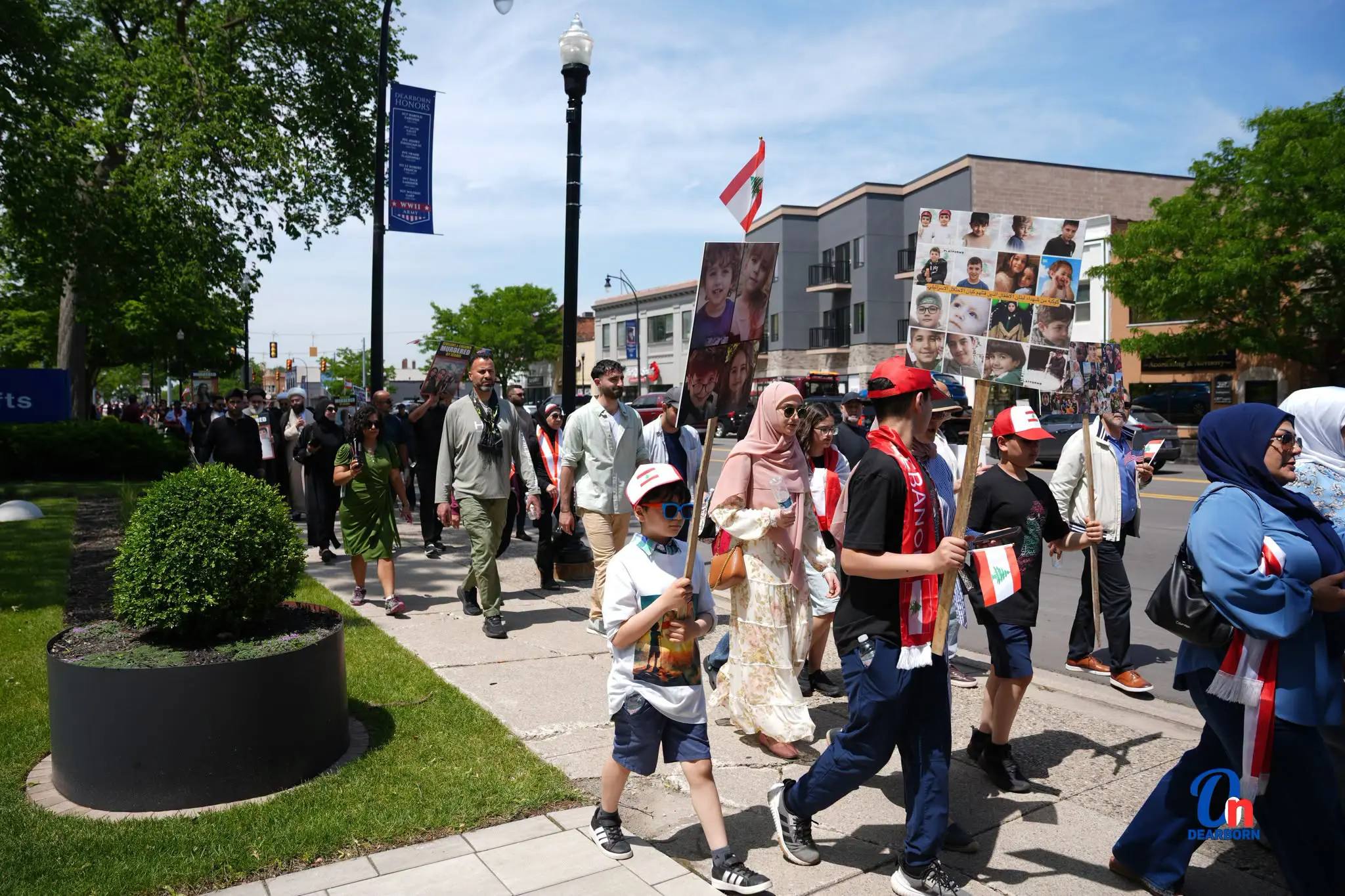
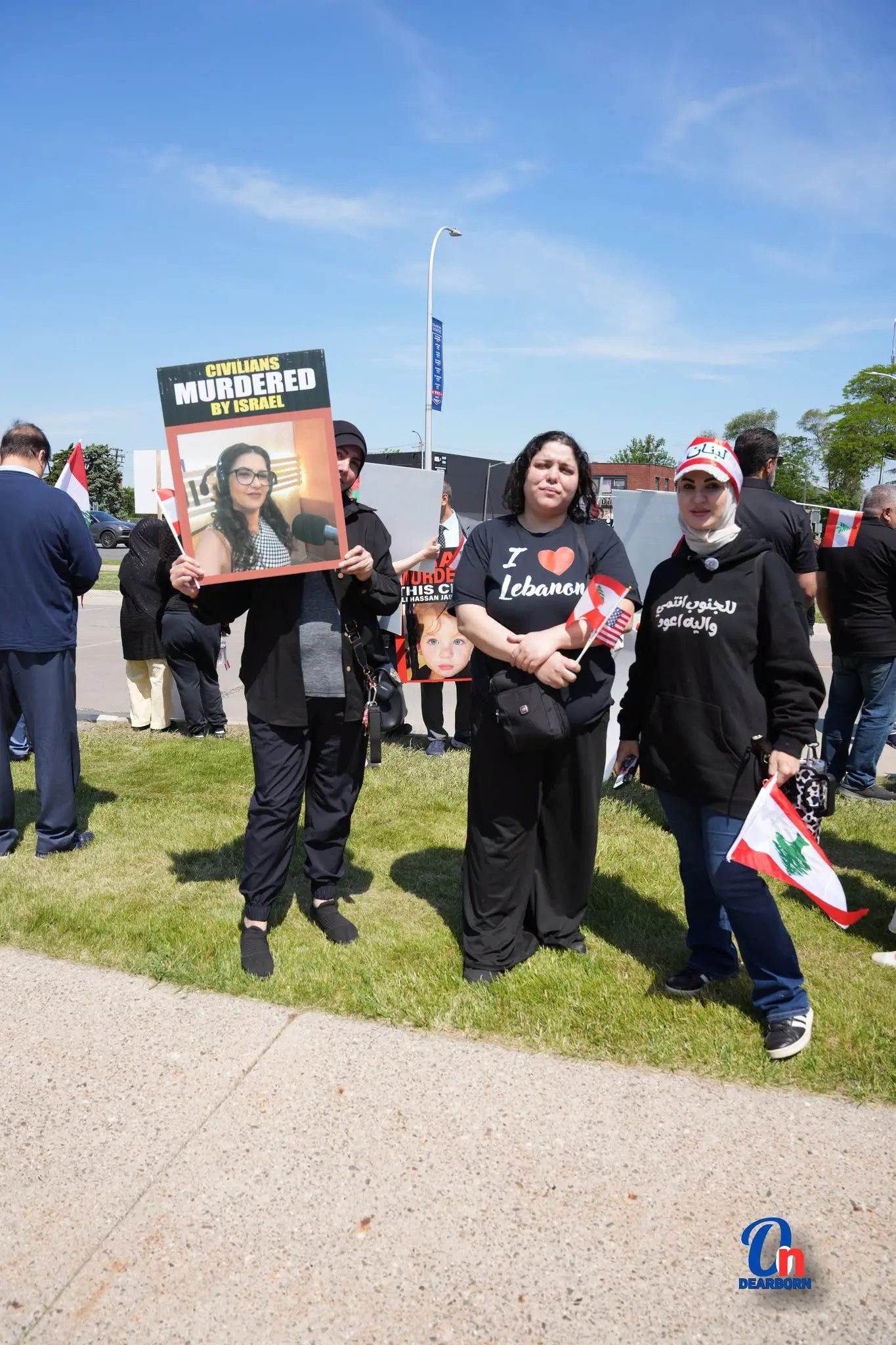
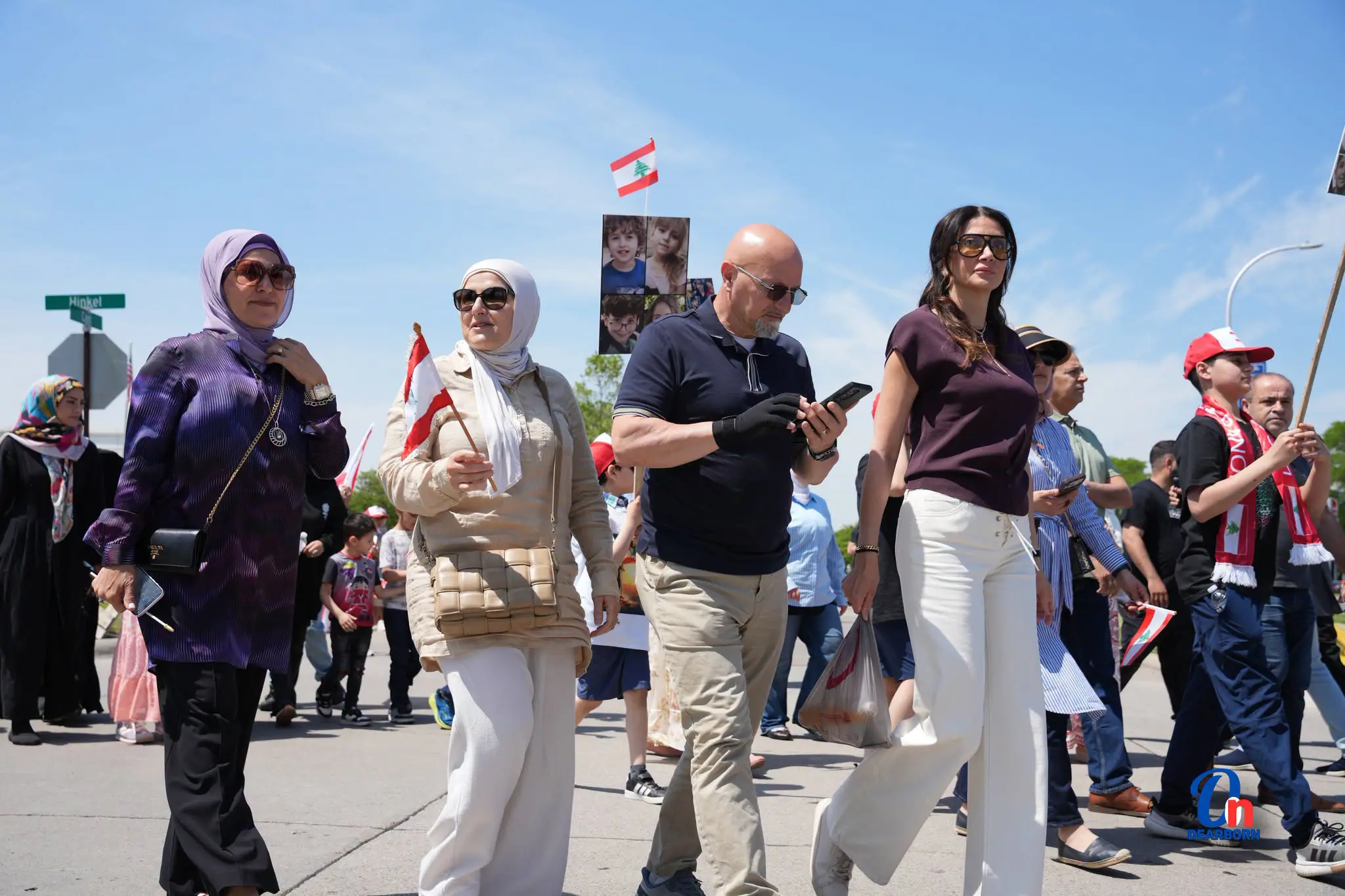
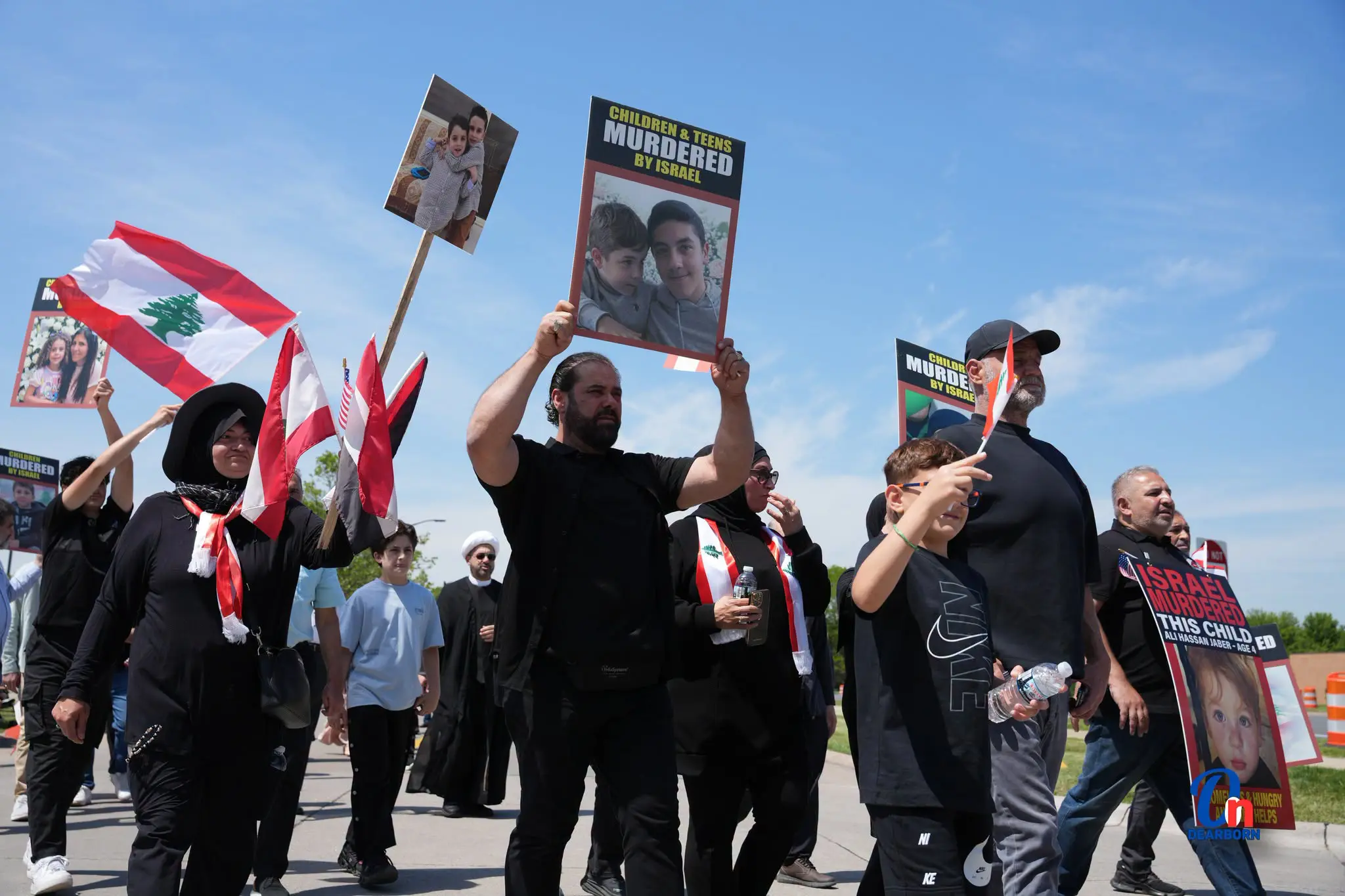
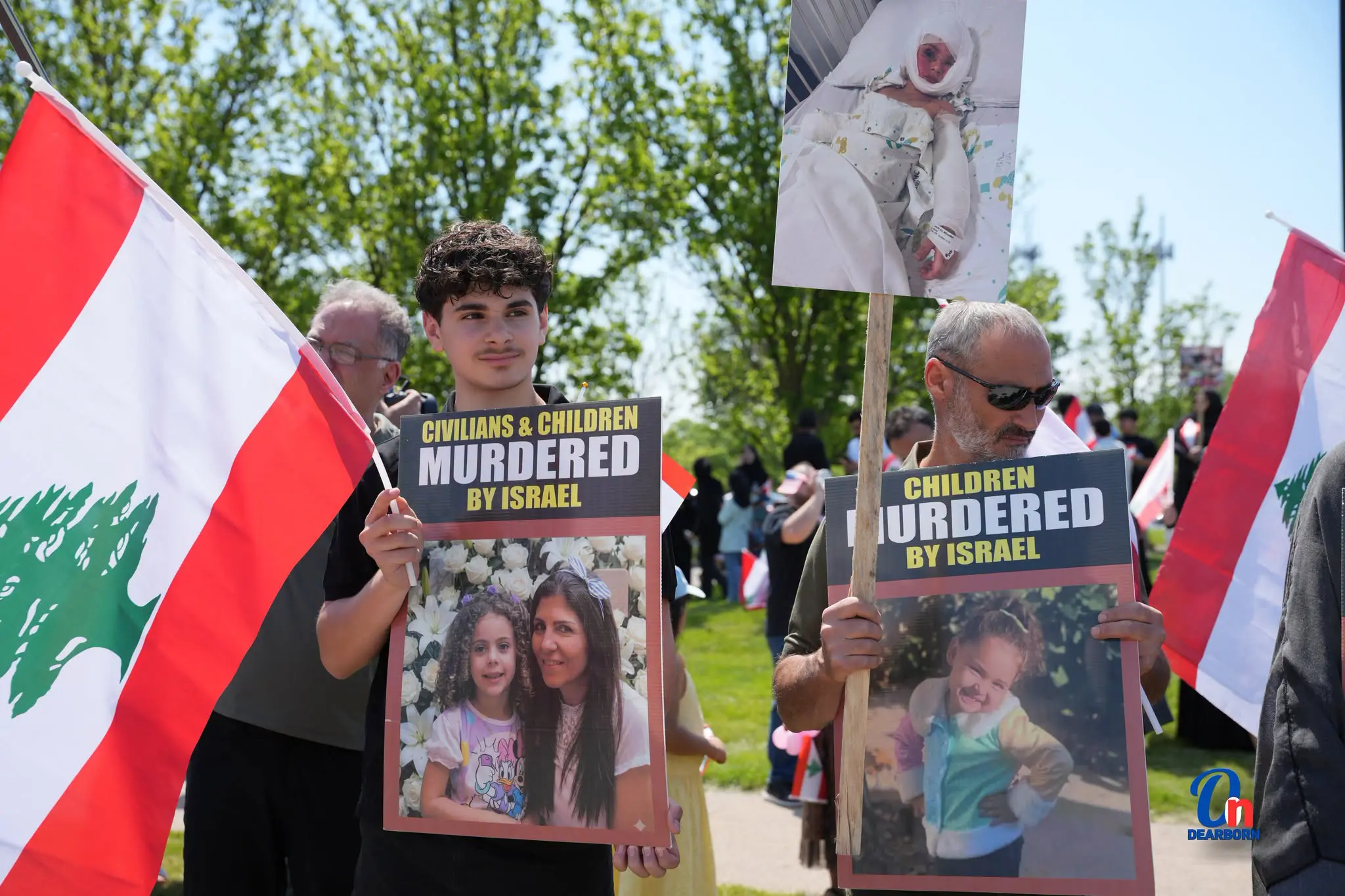
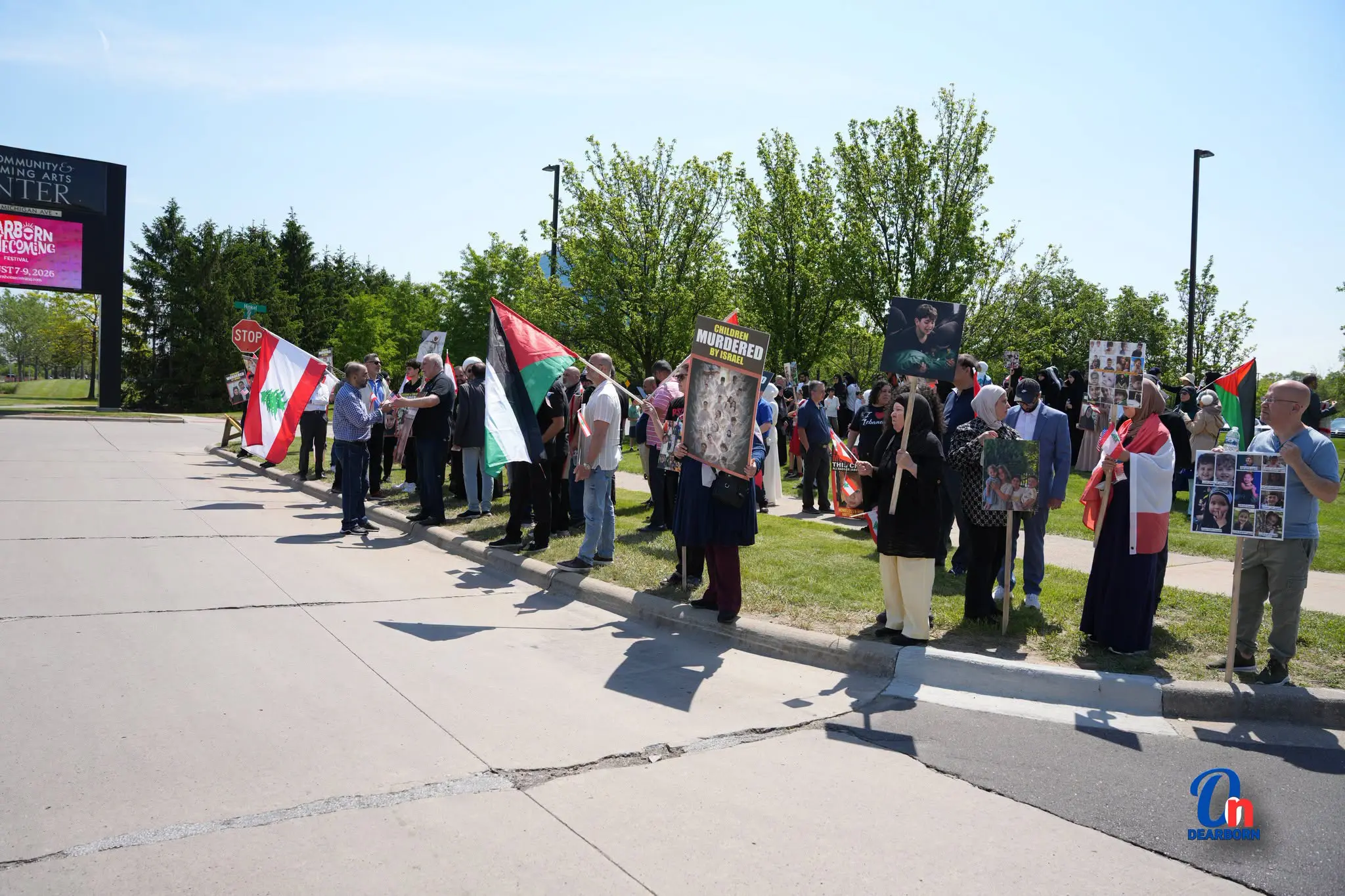
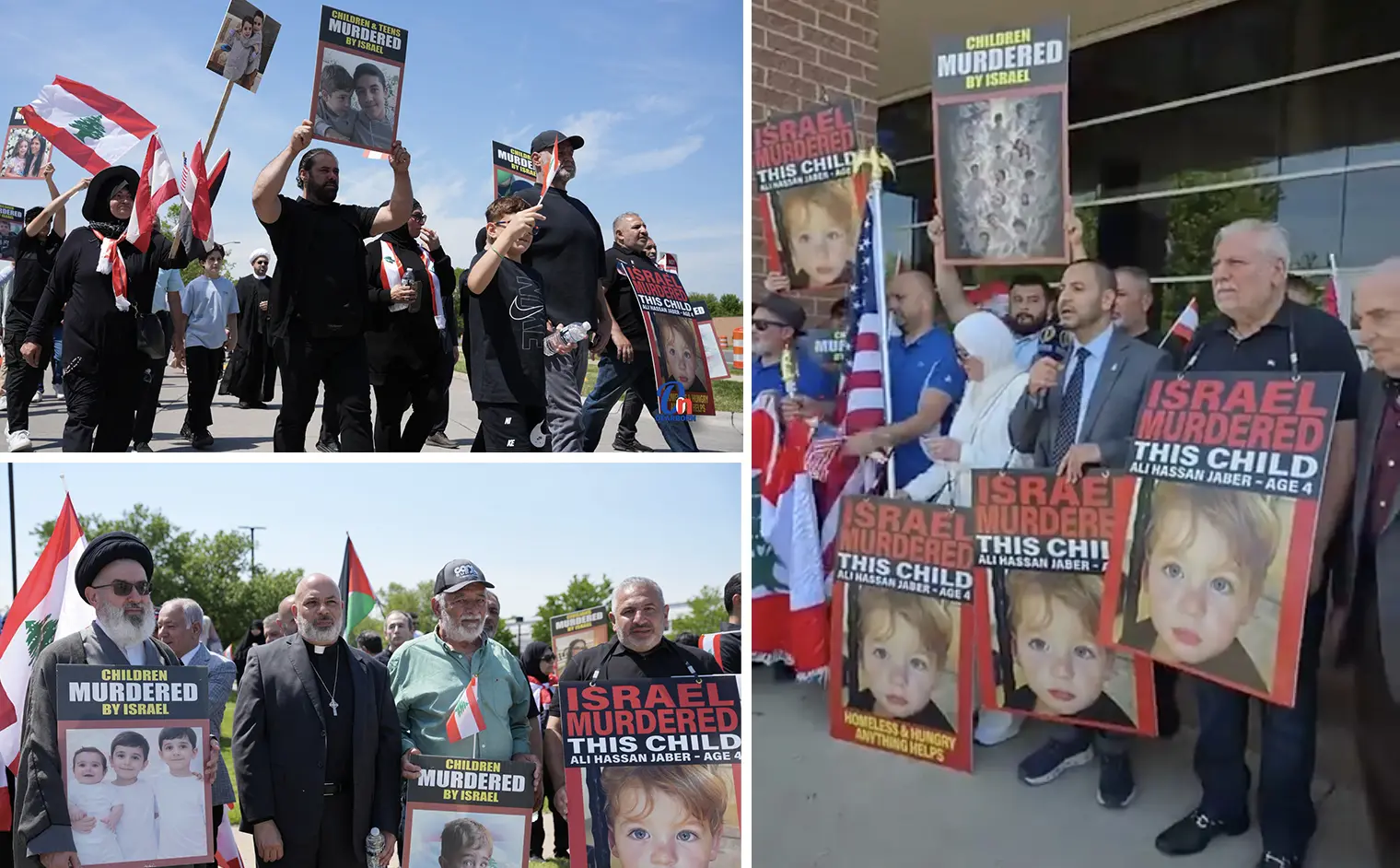
DEARBORN — As the right-wing extremist Israeli government continues its military aggression in southern Lebanon, killing more than 3,200 people, injuring more than 10,000 and destroying thousands of homes and vital infrastructure, more than 200 Lebanese Americans marched silently through Dearborn on Wednesday following Eid al-Adha prayers, braving soaring temperatures in a demonstration of solidarity with civilians killed and wounded in their homeland.
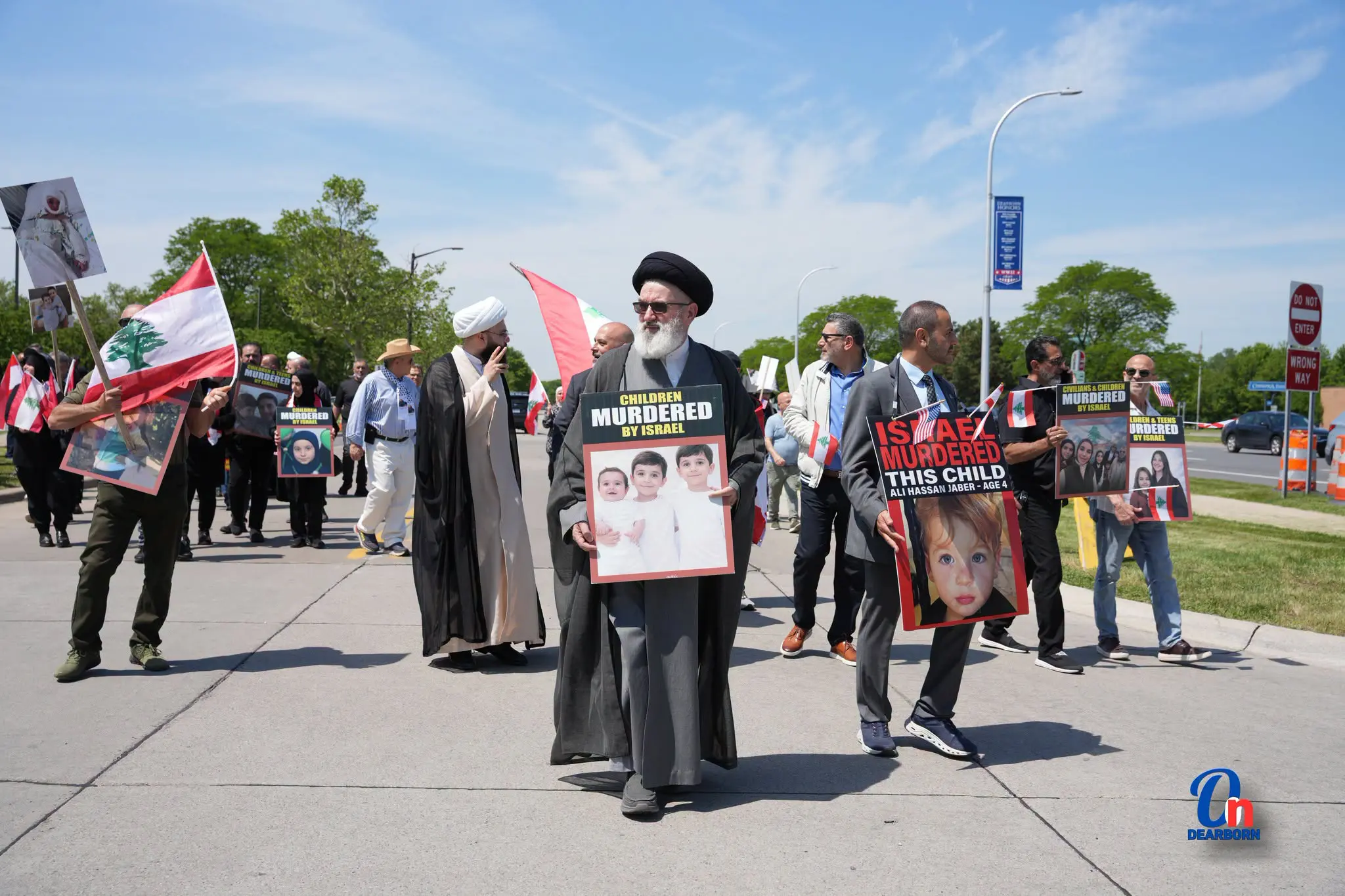
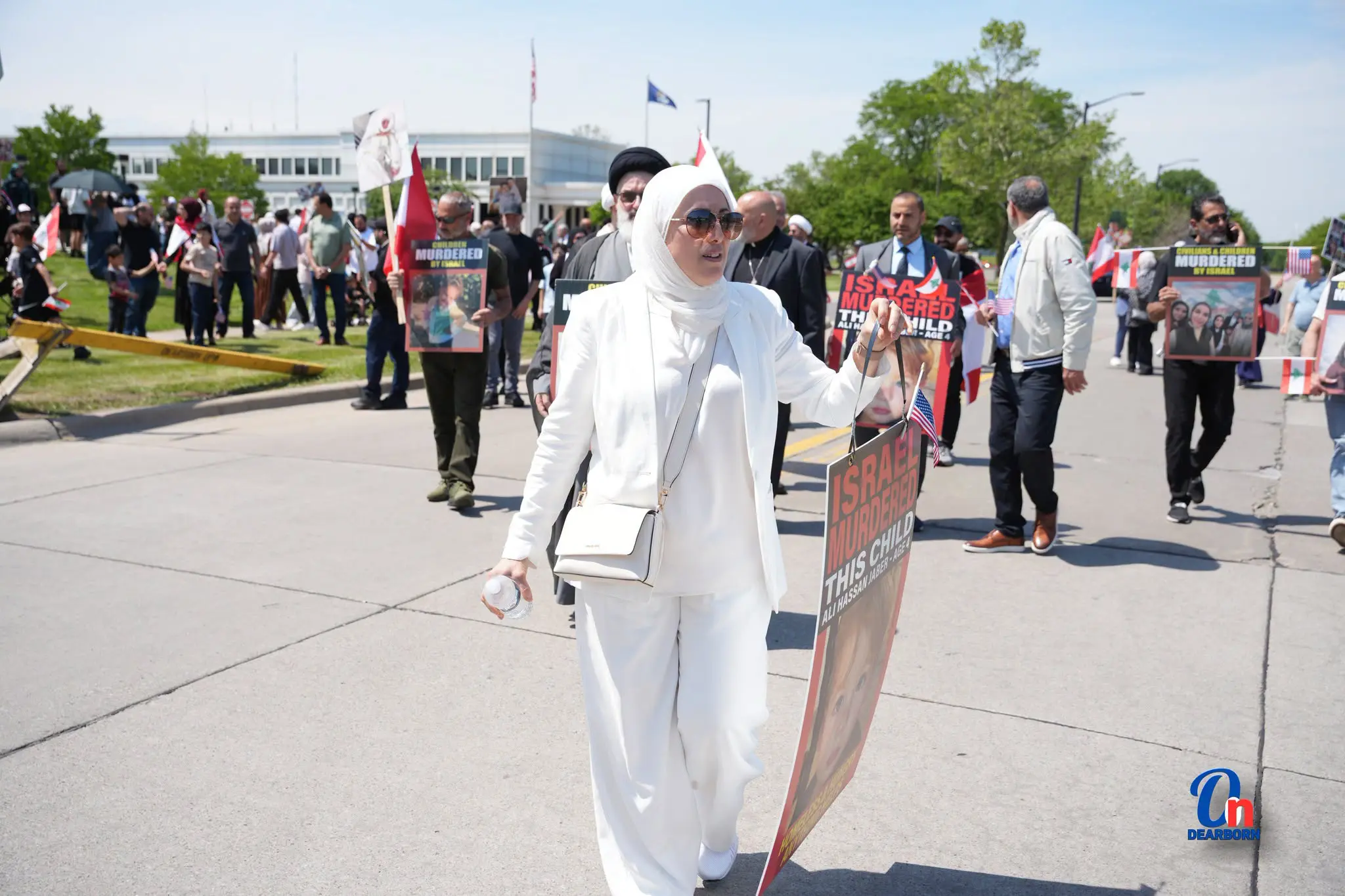
The march stretched along Michigan Avenue from the Ford Community and Performing Arts Center to the Arab American National Museum, drawing attention to the mounting human toll of the conflict and the suffering endured by families across southern Lebanon.
Lebanese Americans call for greater community engagement as war devastates Southern Lebanon.
The demonstration came amid a significant escalation in Israeli military operations that expanded into additional areas of southern Lebanon, including Tyre and Nabatieh, resulting in dozens of civilian deaths and injuries while forcing residents to flee under Israeli military evacuation orders.
A call to remember family and homeland
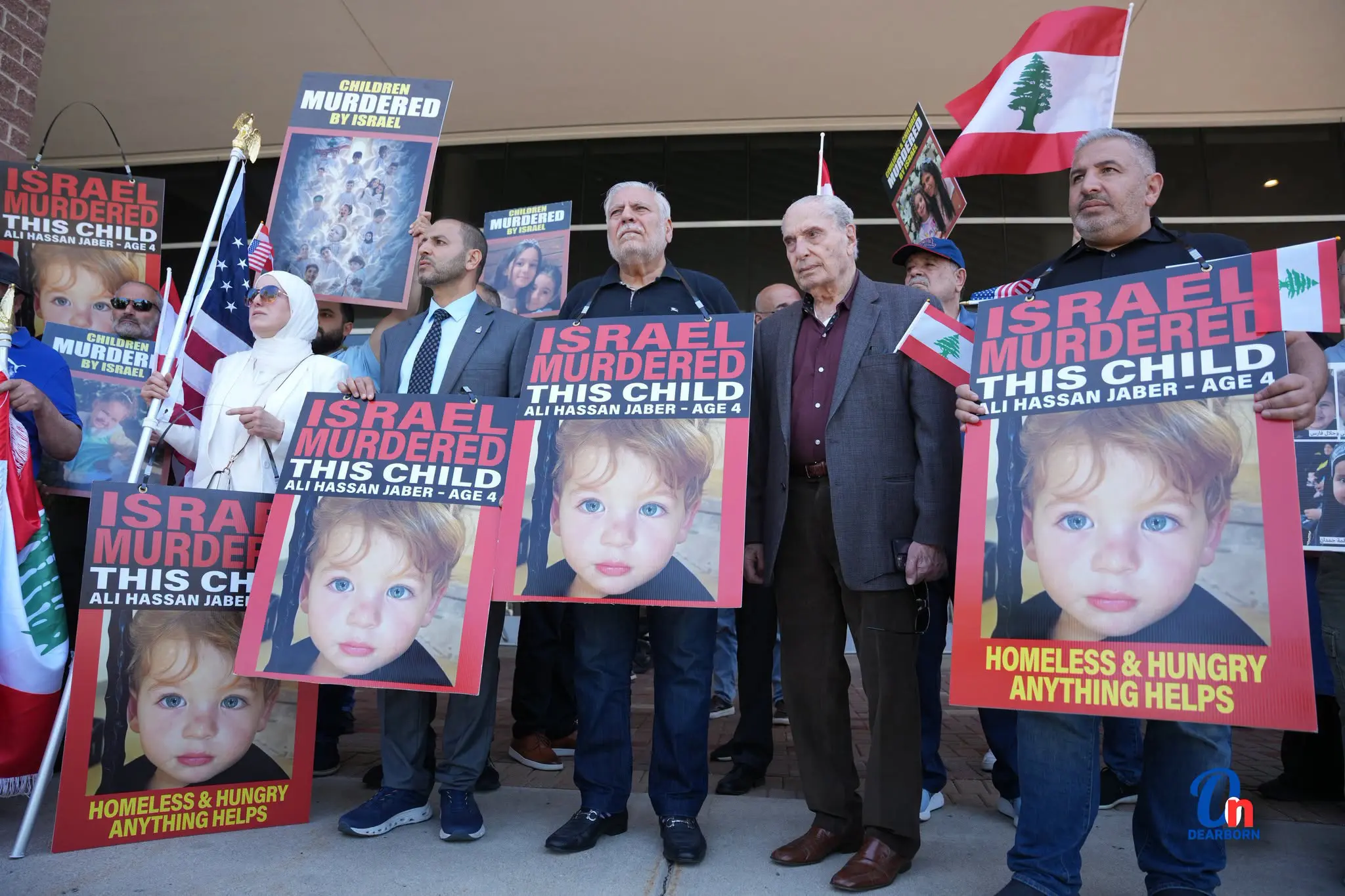
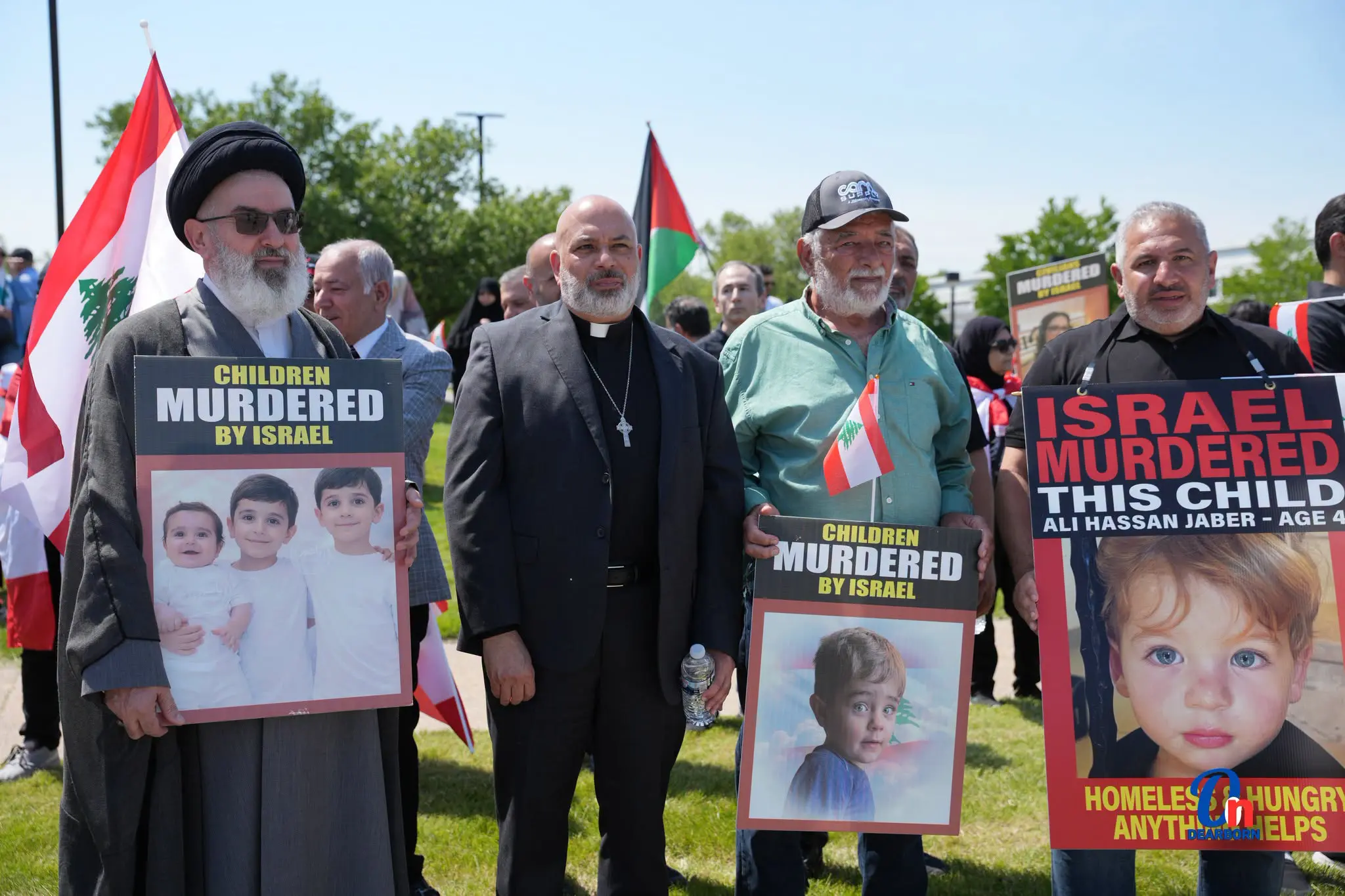
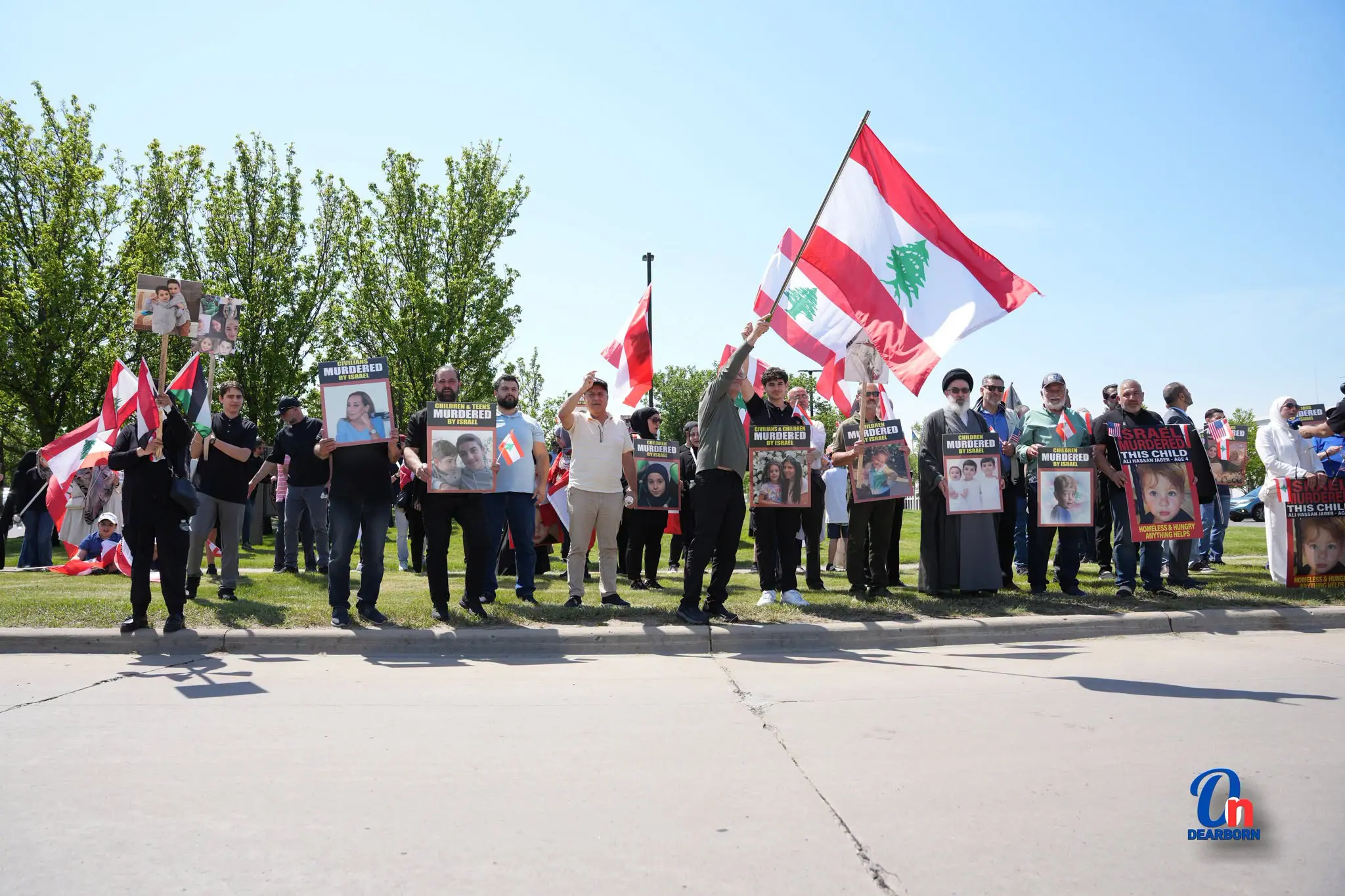
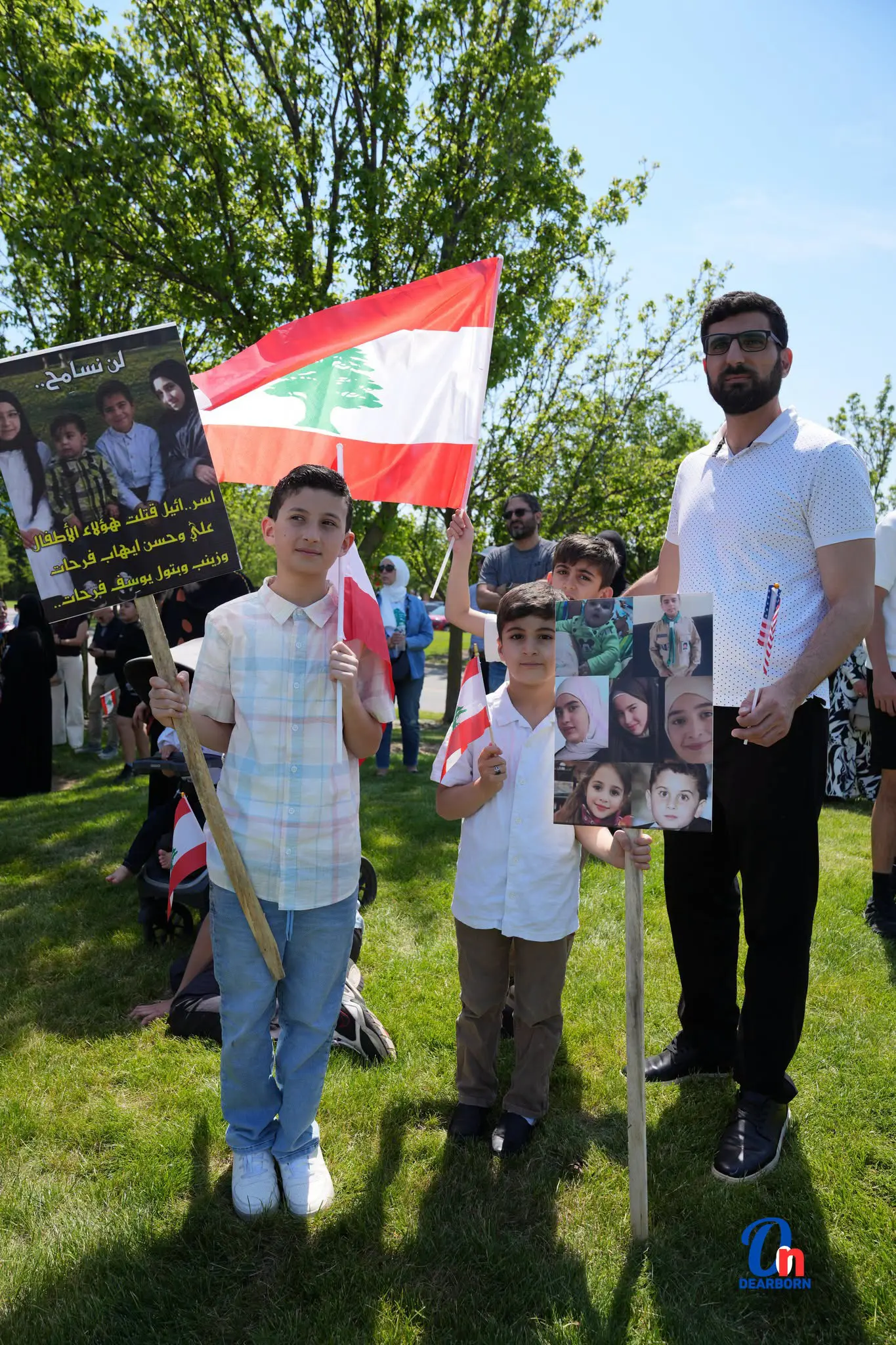
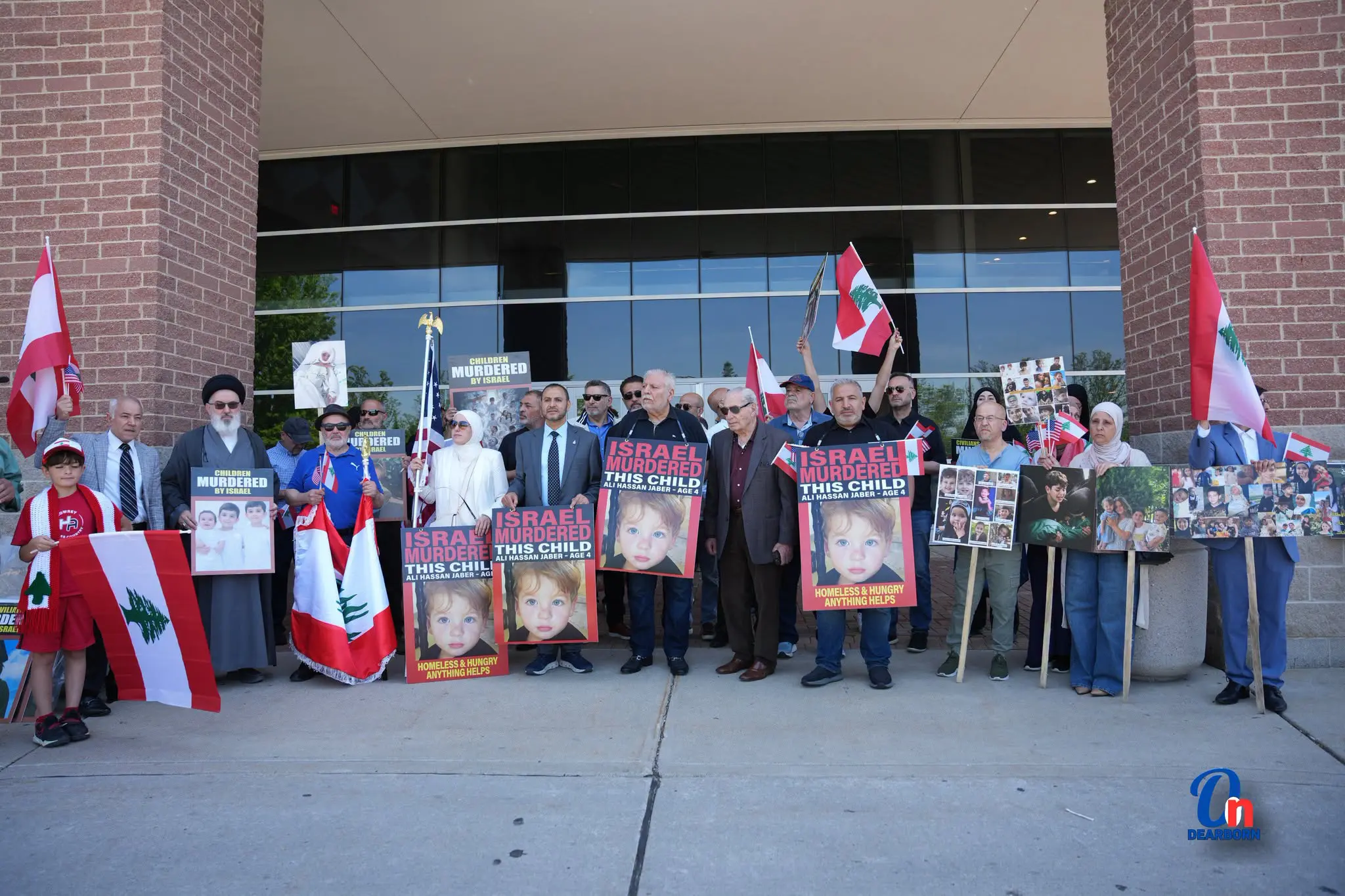
Following the large outdoor Eid prayer held earlier that morning on the grounds of the Ford Community and Performing Arts Center, demonstrators gathered at approximately 11 a.m., carrying Lebanese and American flags alongside photographs of children and family members who had been killed in Israeli attacks.
The silent march was organized by Dr. Lina Saad and Dr. Ibrahim Duhaini, who issued an open invitation to members of the Lebanese American community and the broader public to participate in the event, which was held under the theme “Silat Al-Rahim (Maintaining the Family Ties).”
Organizers said the theme was intended to reflect the human, religious and social bonds that connect immigrants to their families and communities abroad, particularly during Eid al-Adha, emphasizing that distance does not diminish responsibility toward relatives and loved ones enduring hardship.
At the outset of the march, Osama Siblani, publisher of The Arab American News, said the event was dedicated to honoring the children and civilians who lost their lives in Lebanon.
“The sacrifices being made in Lebanon this Eid are greater than ever,” Siblani told participants. “We must stand together as Lebanese Americans and prove ourselves worthy of those sacrifices, and that is the least we can do.”
He also urged greater community participation.
“Please join us so our presence can be larger than ever before, because the sacrifices in Lebanon are greater than ever before,” he said. “Those who were martyred gave their lives for the land from which we came, and for which we are not only prepared to stand here but also prepared to a lot more to support the families of the victims and the displaced.”
Calls for justice and accountability
Sayed Mahdi AlAmeen also spoke about the worsening humanitarian crisis in southern Lebanon, noting that innocent civilians continue to pay a devastating price for Israeli military actions that did not pause even during Eid al-Adha.
AlAmeen urged members of the Lebanese American community, many of whom trace their roots to villages and towns throughout southern Lebanon and the Bekaa Valley, to fulfill what he described as a moral and national responsibility to support their homeland.
“We are the families of the victims, and we should be the first to be here,” AlAmeen said. “While the world closes its eyes and ears, our gathering today is a stand of honor. It requires all of us to be present, to condemn the crimes of occupation and to demand justice for the victims.”
Frustration over sparse attendance
Despite repeated appeals from organizers and a delayed start intended to allow more participants to arrive, attendance remained significantly below expectations. Organizers and participants estimated that just over 200 people took part in the march, walking silently back and forth along Michigan Avenue between the Ford Community and Performing Arts Center and the Arab American National Museum.
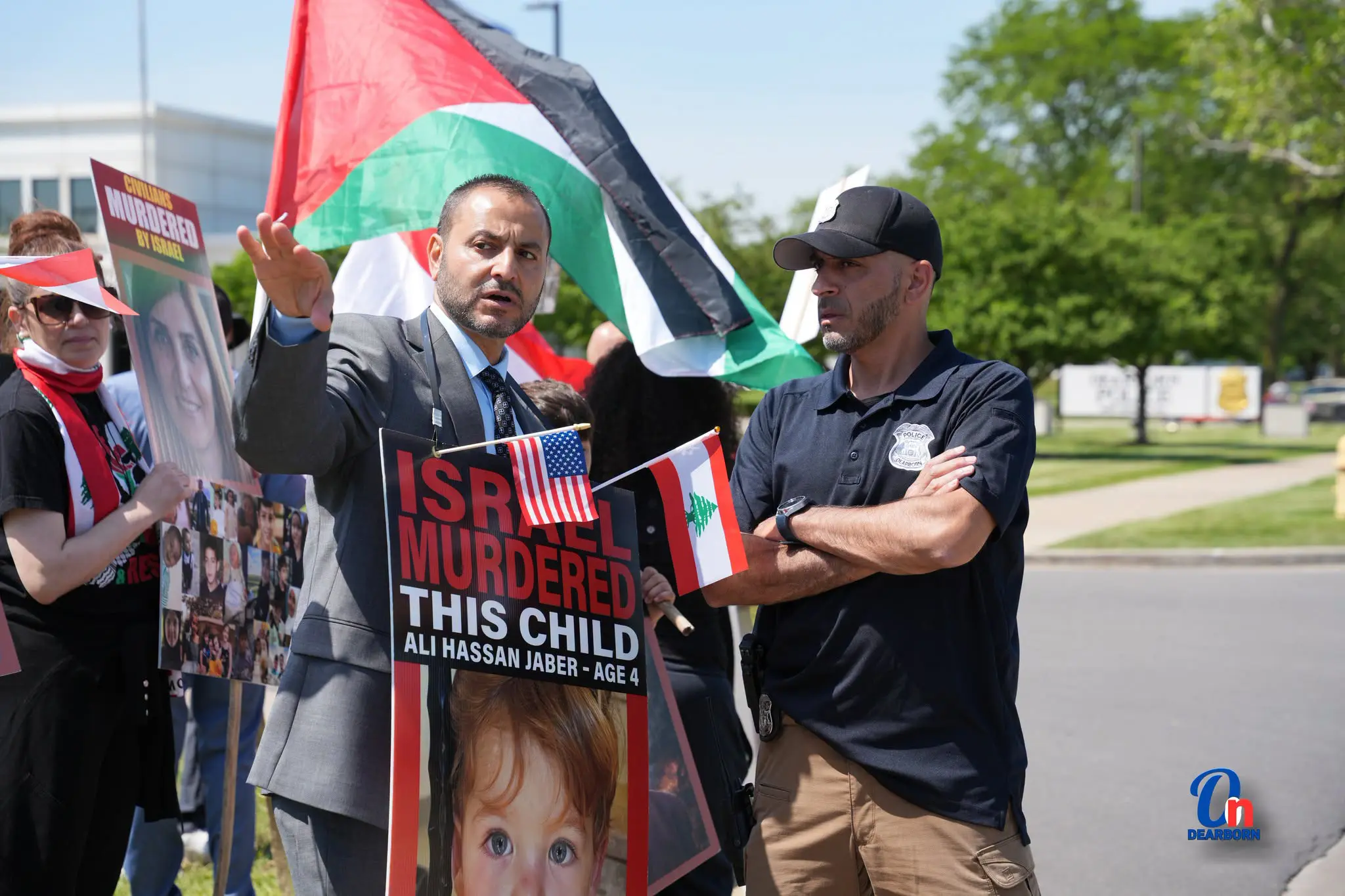
The demonstration was accompanied by Dearborn police officers and emergency medical personnel providing support in the intense summer heat.
The low turnout became a source of visible frustration among many participants. One demonstrator was seen in tears over what she described as the community’s failure to respond adequately to the suffering unfolding in Lebanon.
Some attendees attributed the limited participation to high temperatures and competing family obligations during Eid al-Adha and the Memorial Day holiday period. Others argued that those explanations did not justify the lack of engagement given the scale of destruction and loss of life in Lebanon.
Several participants pointed out that thousands of Muslim Americans had gathered nearby for Eid prayers earlier in the day, yet only a small fraction joined the solidarity march afterward.
“A shame on all of us”
Community activist Micho Assi, whose family originates from the Nabatieh district of southern Lebanon, expressed disappointment over what she described as a low show of support for Lebanon’s victims.
“This is the least that the capital of Arab America can do for Lebanon in the face of Israel’s killing machine,” Assi said.
She noted that Lebanese Americans had stood in solidarity with Palestinians during the war in Gaza and questioned the absence of broader Arab support for Lebanon.
“We stood with Gaza during its suffering and were never afraid to support the Palestinian people and their victims,” she said. “Where are the Arabs today, of every nationality, sect and denomination, when Lebanon is facing this tragedy?”
Assi said she left work specifically to participate in the march, expecting a large turnout following Eid prayers.
“Tens of thousands attended Eid prayer and then simply went home, ignoring a demonstration that should have belonged to all Arab Americans in Metro Detroit, not just Lebanese Americans,” she said, calling the turnout “a shame on all of us.”
Beyond the “weakest form of faith”
Imad Hamad, executive director of the American Human Rights Council (AHRC), also voiced disappointment with what he described as a growing reluctance among community members to engage publicly in support of just causes.
“Eid is certainly a time for celebration,” Hamad said, “but that does not mean we should ignore the suffering, sacrifices and struggles of our people.”
He argued that thousands of worshipers who attended Eid prayers could have devoted even a small portion of their day to expressing solidarity with those affected by the ongoing war in Lebanon.
Hamad dismissed fear of potential consequences as an insufficient excuse for inaction.
“Our opponents have succeeded in conditioning our minds to operate under the ceiling of the ‘weakest form of faith,’” he said, referencing a well-known Islamic concept. “Yet even this silent march did not rise to that minimum standard.”
“We are not second-class citizens”
Among the participants was Souad Bazzi, who said she has witnessed the destruction of her family’s homes in Bint Jbeil for the third time during her lifetime.
Bazzi expressed frustration over what she described as inadequate support for displaced Lebanese families and the relatives of those killed in Israeli airstrikes.
She also criticized Lebanese President Joseph Aoun, accusing him of failing to treat all Lebanese citizens equally.
“We ask the president to treat us the same way he treats other Lebanese,” she said. “He should treat the people of the South as he treats the people of Achrafieh. We are not second-class citizens.”
A silent march against silence
Dr. Lina Saad said the march was organized in response to what she described as growing disengagement within the Lebanese American community from the struggles facing family members in Lebanon.
“Our march today is a call for Lebanese Americans to become more involved in supporting the issues affecting their homeland,” Saad said.
“Our march is silent, but at the same time it is a cry against silence.”
The demonstration concluded peacefully, but participants left with a shared message: That solidarity with Lebanon must extend beyond words and private concern and be reflected in visible public engagement, especially as communities across southern Lebanon continue to endure the human consequences of a savage war.

Leave a Reply