



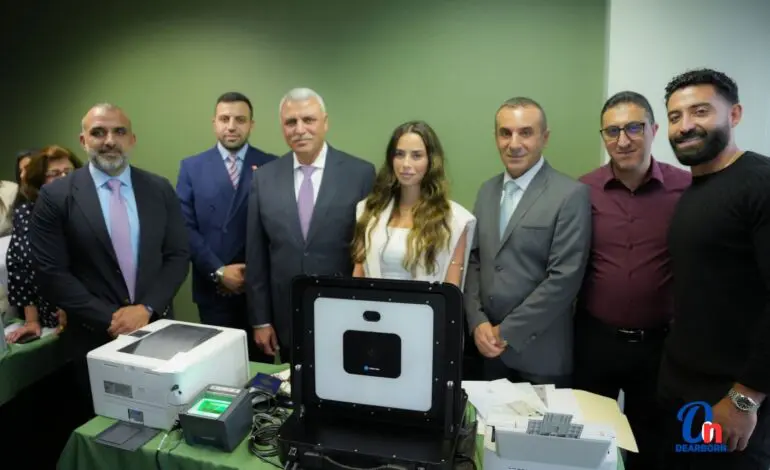

SOUTHFIELD — As part of Lebanon’s broader digital transition to make official documents easier to obtain, reduce forgery and ease the burden on Lebanese expatriates, the Consulate General of Lebanon in Detroit completed the procedures for issuing the first Lebanese biometric passport in the United States on Monday. Major General Hassan Ezzat Choucair, director general of Lebanese General Security, and Lebanese Consul General in Detroit Ibrahim Khalil Charara attended the launch alongside community leaders and members of the public from the Detroit area.
The launch marks the first stage of a plan to introduce biometric passport services at Lebanese consulates across the United States. The new passport contains an electronic chip holding the bearer’s biometric information, including a digital photograph, fingerprints and facial features, to strengthen security and reduce forgery and identity fraud.
The new service relies on a direct technical connection between consular missions and General Security’s database in Beirut. According to Choucair, it allows fingerprints, photographs and documents to be processed and checked promptly using artificial intelligence. He said efforts to improve the movement of travelers through Beirut’s international airport have reduced the time involved to 10 minutes.
The Consulate General of Lebanon in Detroit, which serves Lebanese expatriates in Michigan and other Midwestern states, was the first U.S. stop for the digital system. The rollout then moved to the Lebanese Embassy in Washington, D.C., followed by the Consulate General in Los Angeles, California, ahead of a planned expansion to other countries in the Americas. The system has recently been adopted in France and some Gulf countries. Lebanese General Security has confirmed that the Detroit consulate and Washington embassy were equipped to begin accepting biometric passport applications from U.S. residents on September 21.
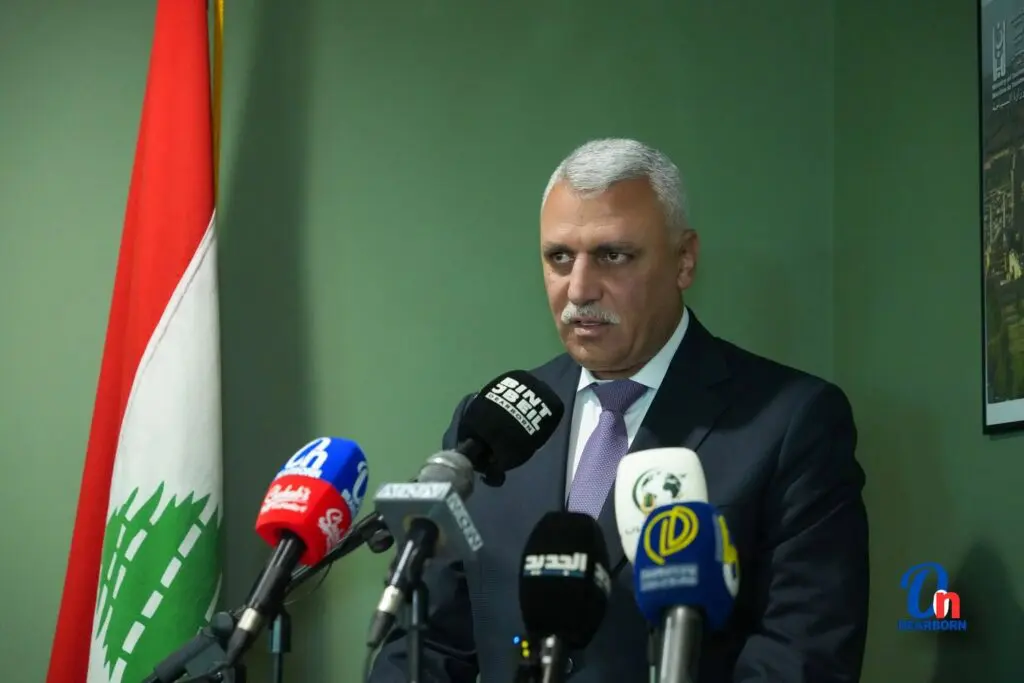
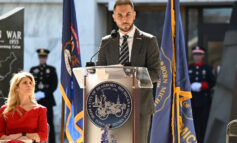
Major General Hassan Ezzat Choucair, director general of Lebanese General Security. – Photos by Abbas Shehab
Ceremony at the consulate
The service was launched following a ceremony at the Lebanese consulate in Southfield attended by numerous community leaders and residents from across Metro Detroit.
Speaking at the event, which was introduced by community activist Mohammad Chebani, Consul General Charara expressed gratitude for the trust Lebanese General Security had placed in the Detroit consulate by making it “the first launch point for this vital project on the American continent.” He said the service would greatly simplify procedures for Lebanese expatriates in Michigan and the Midwest.
Charara praised Choucair’s direct role in securing the equipment needed to operate the biometric fingerprint system and overcoming financial obstacles faced by Lebanon’s Foreign Ministry amid the country’s exceptional circumstances. Since taking up his consular post in September 2025, Charara said, he had made the project’s success his top priority. It was achieved within a year through the combined efforts of Lebanese expatriate organizations and state institutions, particularly General Security.
Charara concluded by saying the biometric service is the beginning of a broader effort to improve the consulate’s work. Projects now in preparation include an upgraded communications system and a more advanced website to improve contact with the diaspora and make future transactions easier.
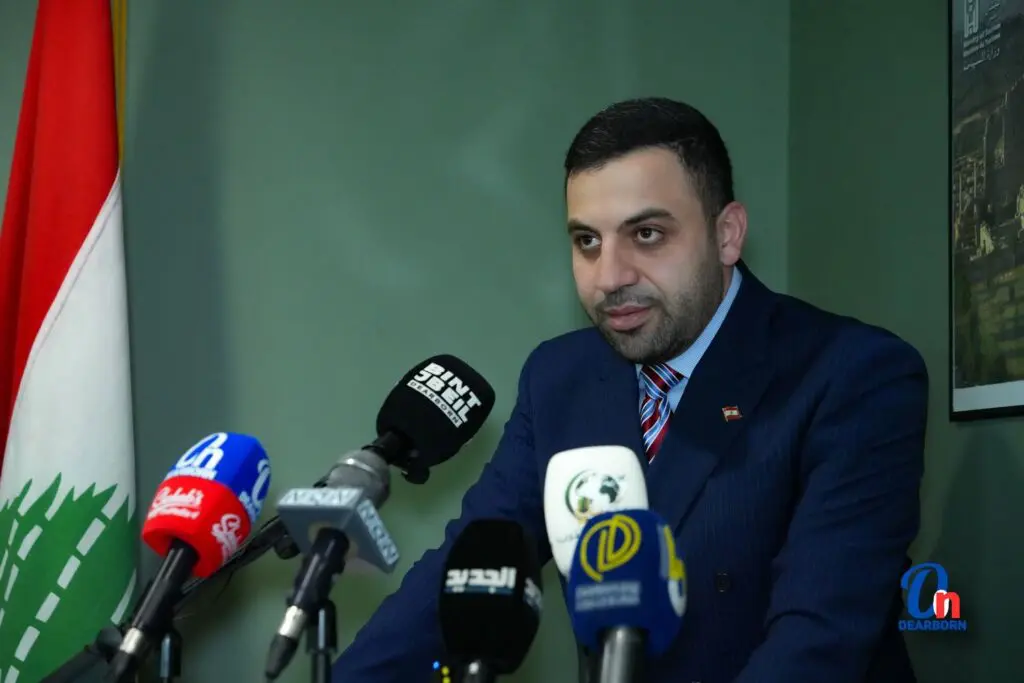
Lebanese Consul General in Detroit Ibrahim Khalil Charara. Photos by Abbas Shehab
For his part, Choucair described the launch of the biometric system at the Detroit consulate as “a turning point in developing services for expatriates.” He said it was more than a technical upgrade: It was a practical step toward a modern, accurate and more secure administration that protects identity and official documents while reducing forgery and identity fraud.
“After Detroit, we will install the system in Washington, then New York and California, and continue to Germany, Argentina and Brazil,” Choucair said. He said the digital system was planned for 80 countries over the following two months so Lebanese citizens could obtain a modern biometric passport in place of the older passport, which he said had caused travelers problems in many countries and was being phased out.
Choucair also discussed the wider digital transition that General Security began two years ago. He said the agency had become the first Lebanese administration to create a digital identity for every citizen and legal resident to high security standards, in cooperation with leading international companies in the field.
He described a new app expected to launch on digital stores at the beginning of next month. It would allow citizens to scan and submit documents for automated processing and verification using artificial intelligence and facial recognition through a camera.
Choucair stressed the integrity and international credibility of Lebanese passports. He said official General Security investigations had found no passports issued to people who were ineligible or who were not Lebanese, and urged accuracy when discussing such claims in the media or on social platforms.
“We conducted investigations that showed, so far, no non-Lebanese person holds a Lebanese passport, while some people speak of dozens of passports held by certain parties without proof or evidence,” he said. “Give us one passport to examine.” Spreading an unsupported allegation of that kind, he warned, harms the Lebanese passport’s reputation abroad.
On another subject, Choucair pointed to General Security’s efforts to modernize border crossings to meet European standards. He also discussed improvements to airport services made in cooperation with Middle East Airlines Chairman Mohammad El-Hout, saying the aim was to make arrivals and departures smooth enough to take travelers “from the aircraft door to the car door in 10 minutes.”
Choucair concluded by expressing pride in the praise General Security received from Lebanese President Joseph Aoun during the opening of its new buildings. Aoun had called on state institutions to follow General Security’s example in modernization, Choucair said. He added that the agency had built strong trust with Lebanese and international communities and close security cooperation with other countries, particularly the United States, which welcomed Lebanese immigrants and gave them opportunities to succeed and prosper.
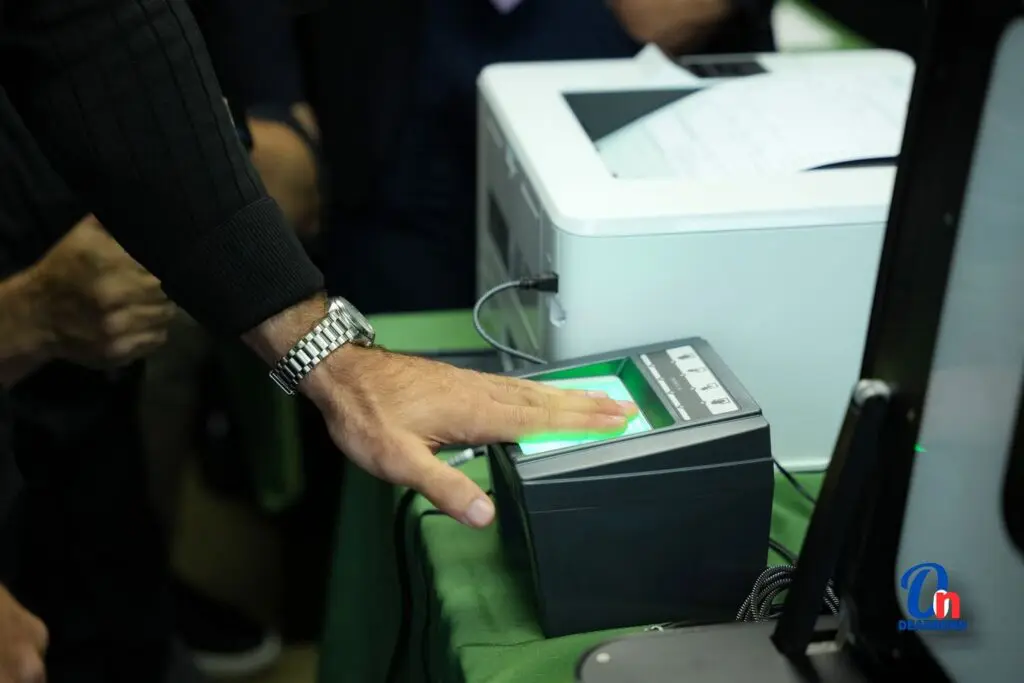
First Lebanese expatriate to apply for his biometric passport at the Lebanese Consulate General in Detroit, Monday, September 21. – Photos by Abbas Shehab
Requirements for the new passport
Following the decision to phase out the current Lebanese passports, known as the 2003 model, biometric passports are issued for five years to minors and 10 years to people over 18.
The documents required to apply include a Lebanese identity card or individual civil registry extract, a previous passport if available, and recent photographs against a white background. Fingerprints are also required for most age groups.
A principal feature of the biometric passport is an electronic chip that stores the holder’s digital photograph and fingerprints from all 10 fingers to help protect against forgery. Children under 16 and adults over 59 are exempt from fingerprint collection.
In Lebanon, applicants must appear in person at General Security centers to have their fingerprints and digital photographs taken. Abroad, biometric data can now be collected at Lebanese embassies and consulates, allowing expatriates to apply without traveling to Lebanon specifically to provide fingerprints.
Following a 50 percent reduction in consular fees, the article states that a Lebanese biometric passport in Detroit costs $300 for a 10-year passport and $150 for a five-year passport. The Lebanese Embassy’s current passport page lists those same amounts.

Leave a Reply